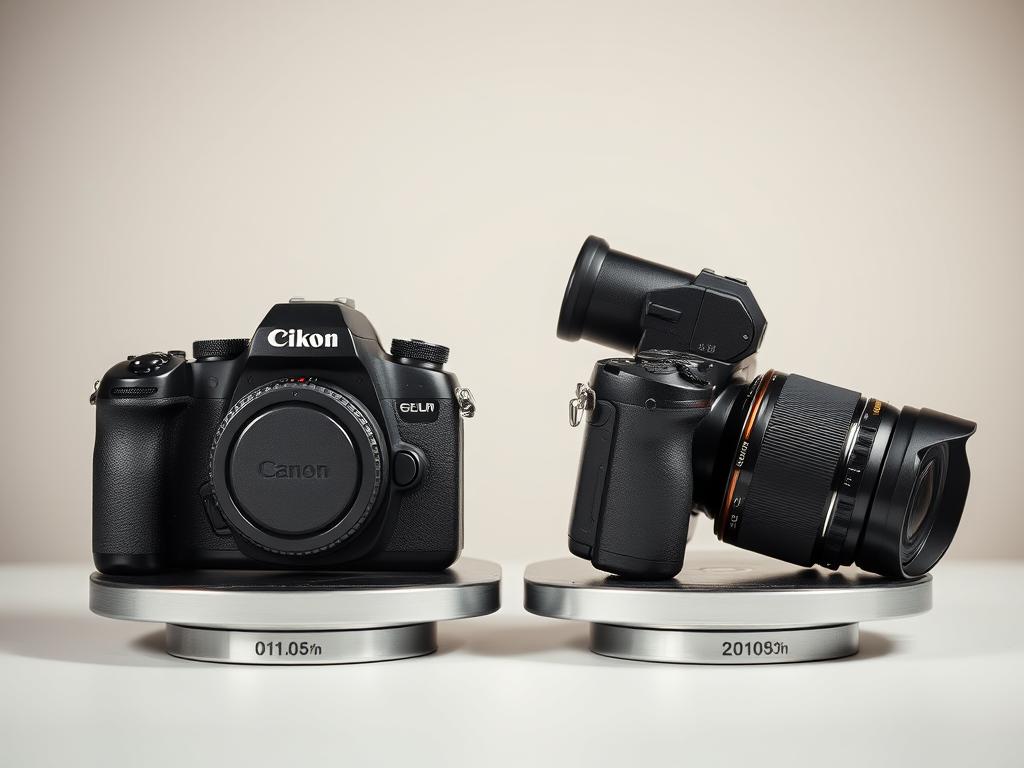
Did you know the weight gap between Nikon and Fuji APS-C systems is about 450g? That’s like carrying an extra 600mL water bottle. The battle between DSLR and mirrorless cameras is heating up. With DSLR sales dropping and companies like Sony, Fuji, and Olympus innovating in mirrorless, it’s crucial to know the pros and cons of each. This showdown isn’t just about user experience. It also looks at what switching between these popular gear types means for photographers. Let’s dive into these camera comparisons to find out which is the best choice in today’s photography world.
Key Takeaways
- The weight difference in professional APS-C systems can be significant.
- Consumer kits for APS-C systems show a much closer weight parity.
- Full-frame mirrorless systems often have a weight advantage compared to DSLRs.
- Sensor size plays a crucial role in the overall weight of the camera system.
- Understanding the technological advancements is essential for making an informed choice.
Understanding DSLR and Mirrorless Systems
Camera technologies have evolved, changing how we take pictures. Mirrorless cameras arrived in 2009, offering a new choice alongside DSLRs. This began a new era in photography, mixing old techniques with new digital improvements.
Evolution of Camera Technologies
At first, DSLRs won over many with their optical viewfinder advantages and strong design. Yet, as time went on, mirrorless cameras started to catch up. They made big strides in autofocus, putting them ahead in some ways. Now, advanced detection systems in these cameras find subjects like people and animals very accurately.
Key Features of DSLRs
DSLRs are still loved for their wide lens selection and great picture quality. The Canon 5D Mark IV shows off this quality and versatility. Features like long battery life and the feel of an optical viewfinder make using them more engaging. This connection between the photographer and their camera boosts creativity.
Key Features of Mirrorless Cameras
Mirrorless cameras come with exciting features that stand out. Top brands like Sony and Canon lead with high-quality viewfinders and fast autofocus. They are light, perfect for all kinds of photography, from trips to city streets. Their excellent video quality and live exposure updates make them a strong choice. Mirrorless cameras are proving to be a formidable option.
Gear Comparison: Weight, Performance, and Usability
Looking into camera systems shows how vital it is to compare their weights. Knowing about DSLR weight and mirrorless weight savings helps pick the right gear. Hands-on, the heaviness of a camera shapes the shooting experience, especially for long sessions. For example, checking out popular cameras like the Nikon D5500 and Fuji X-T1 shows the weight difference isn’t huge. It usually varies by up to 450 grams, depending on the lenses used.
A Closer Look at Weight Differences
Comparing camera weights, DSLRs like the Nikon D750 feel heavier. Some photographers like this for its stability. On the other hand, mirrorless cameras like the Sony A7 Mark II are lighter which makes moving around easier. Choosing depends on what feels good and the type of photography. Weight plays a big role in performance during photoshoots.
Performance in Various Shooting Conditions
Testing cameras in different conditions shows their strengths. Mirrorless cameras do well in low light, having fast autofocus that beats many DSLRs. This is especially true for videos. They have electronic viewfinders too. These let photographers see changes in real time, helpful in tough light. DSLRs, however, have longer battery life. This is valuable for long shoots outdoors.
User Experience: Photographers’ Preferences
Photographer opinions on cameras are personal. Many like the real feel of DSLRs’ optical viewfinders. Others go for the accuracy of mirrorless cameras’ electronic viewfinders. I switched from DSLR to mirrorless for these reasons. Talking with other photographers shows how different our creative views are. It opens up discussions on DSLR vs. mirrorless. Each camera type suits different photography styles, affecting how we capture what we see.
Conclusion
In reviewing the differences between DSLR and mirrorless cameras, we see both have unique benefits and limitations. When looking at camera evolution and key features, it’s clear the choice depends on personal needs and tastes. Whether you prefer DSLRs for their durability, or the modern feel of mirrorless cameras, both types are designed to meet various photographic styles.
Choosing the best camera system requires careful thought about your needs. Think about the shooting conditions you usually face and the features most important to you. Making these considerations can help you pick a camera that you’ll be happy with for a long time.
This guide aims to show that the ideal camera matches your creative vision and practical requirements. Whether you go for a DSLR or a mirrorless option, both can enable you to take amazing photos. The most important thing is to know what you value in a camera, both for its function and artistic potential.
