Did you know Salvador Dali created over 1,500 paintings in his career? This shows that commitment and regular practice are key to becoming a great artist. As an aspiring artist, I’ve learned how important it is to have good sketching skills. Great artists like Vincent Van Gogh and Leonardo da Vinci all started as beginners.
Learning from famous artists like Picasso and Edgar Degas taught me about creativity, hard work, and inspiration. These are important in our journey to become better artists.
In this guide, I’ll share essential sketching tips to improve your skills. These tips will make practicing more effective and make your creative journey exciting. Whether you’re a beginner or improving your skills, these tips are made for you. Let’s explore drawing together and unlock your potential!
Key Takeaways
- Practice regularly to improve your sketching skills.
- Experiment with various drawing techniques for versatility.
- Begin with monochrome to master the basics before using colors.
- Utilize warmup exercises for developing hand-eye coordination.
- Incorporate parallel hatching for effective shading practices.
- Seek out high-contrast images for drawing references.
- Explore online resources for structured learning and growth.
Understanding the Basics of Sketching
Sketching is at the heart of art. It includes methods that show the value of close observation. Artists can grow their skills by capturing the world’s detailed views.
Basic shapes like circles, rectangles, and triangles are key. I’ve found turning complex subjects into simple forms makes drawing less scary. It gets easier and more doable.
Importance of Observation in Art
Observation in art helps artists notice fine details. Drawing a little each day works better than one long session. This way, one’s vision sharpens, making it easier to sketch a scene’s true character.
Beginners should forget about being perfect at first. Start by getting a feel for the shape. A confident hand and line work come with practice.
Breaking Down Complex Subjects
To draw complicated things, start with simple shapes. Then, add lines, details, and textures bit by bit. A 6B graphite pencil is great for starters. It makes the dark lines smooth.
Choosing the right sketchbook matters too. Look for quality paper that’s thick and acid-free. This makes sure pencil and pen work well together.
Different pens like ballpoint, technical, and brush pens each add something special to a sketch. Learning about these tools helps you master drawing. A sketchbook full of drawings shows how an artist grows and changes.
Essential Sketching Tips for Improvement
Improving your sketching skills takes dedication and exploring different methods. Regularly practicing is key to bettering your art. It helps with hand-eye coordination and learning to observe closely. Trying out various drawing techniques adds uniqueness and depth to your work.
Practice Regularly
Daily sketching boosts your confidence and skills. Even a few minutes each day can make a big difference. It helps you accept flaws, making your art more real and expressive. Regular practice translates thoughts to paper smoothly, letting you quickly and accurately sketch your subjects.
Experiment with Different Drawing Techniques
Trying out new drawing techniques is crucial. Techniques like hatching and stippling make your sketches stand out. Using softer pencils for darker tones brings contrast to your work. Mastering different methods reveals your artistic style, making your art captivating.
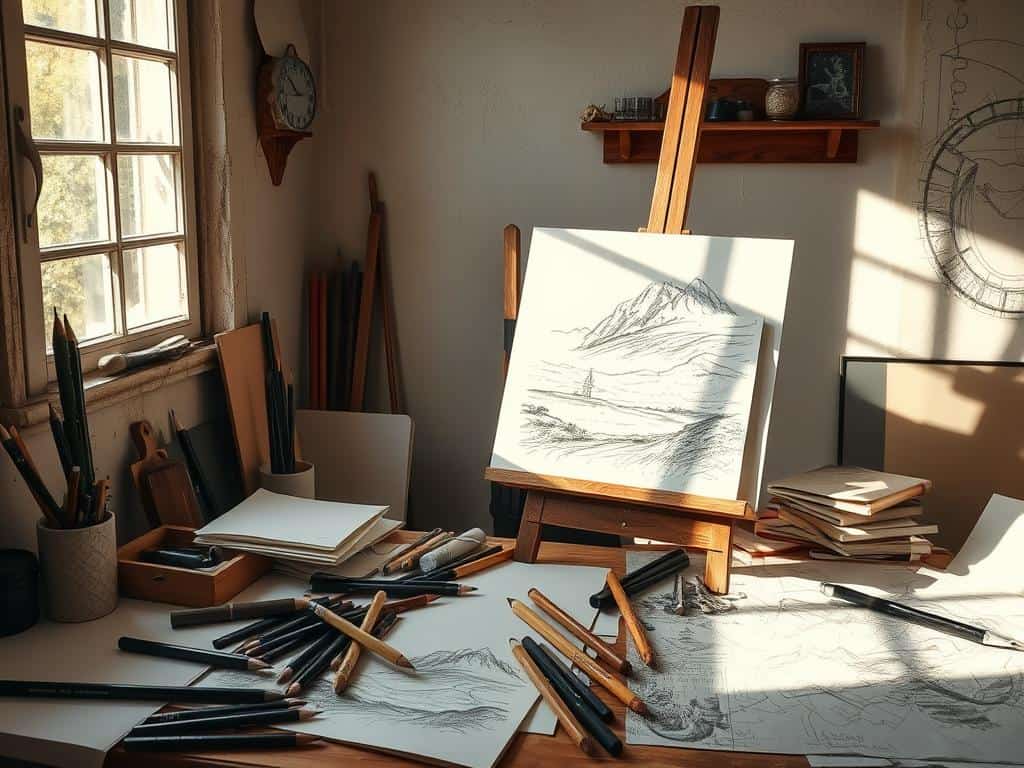
Sketching Tips: Elevating Your Artistic Journey
As I explore my art more, I’ve learned that size and balance matter a lot. They help viewers feel something special when they see my work. Understanding how different parts of my art relate to each other makes it more powerful and enjoyable.
Understanding Scale and Proportion
Thinking about scale and proportion helps me make my drawings more balanced and focused. By looking closely at how big or small things are, I can guide where people look first. These ideas help me make my art feel more real or even otherworldly, depending on what I want.
Regularly using these concepts has totally changed how I create art. It lets me try new viewpoints and shapes, making my work more interesting.
Exploring Different Line Techniques
Trying out different ways to use lines has made my art better. Lines can show feelings, depth, or texture, making my drawings come alive. Changing line thickness and style lets me share my thoughts in exciting ways.
I suggest playing with HB lead pencils for both fine and bold lines. Choosing the right tools and methods adds a special touch to each drawing.
Conclusion
In summarizing our exploration of sketching, it’s clear that becoming an artist is both exciting and complex. Learning basic drawing techniques and observing carefully are key. It’s just as important to try new things in your art.
Regular practice boosts your skills and self-assurance in your unique style. Trying out new mediums or digital tools can help a lot. Don’t let fear of being judged stop you. Moving past that fear can lead to big improvements in your art. Remember, each artist has their own journey. It’s crucial to gather experiences and stay open to learning.
Using these sketching tips regularly can deepen your understanding of art. Working with different techniques, colors, and shadows improves your work and your connection to creating. Whether you’re starting out or continuing your art journey, keep exploring, practicing, and evolving. That’s the essence of true artistry.
