Did you know there are over 1.1 billion websites online now? Each one competes for attention in a busy digital world. The huge number shows why good web design software is key for making a website. Whether you’re starting a new site, updating an old one, or making your site easy to use, the right tools are vital. They help improve your presence online.
In this article, I’ll share the best web design software out there. I’ll look at their features, how easy they are to use, and their prices. Through detailed evaluations and info from top sources, I’ll help you pick the best software for you. This is crucial in today’s competitive market.
Key Takeaways
- Choosing the right web design software is crucial for standing out in a saturated market.
- Understand different types of software to cater to various design needs and skill levels.
- User-friendly interfaces are essential for both beginners and professionals.
- Integration of AI and customization flexibility greatly enhance design capabilities.
- It’s important to consider both free and subscription options based on your budget.
Understanding Web Design Software Options
Choosing the right web design software is key today. Many options are available, for different skill levels and needs. This article will cover the various web design software types. We’ll look at their features and benefits.
Types of Web Design Software
There are three main types of web design tools. These are code-free platforms, code editing software, and graphic design software. Platforms like Wix and Content Hub let people build sites without coding. They use drag-and-drop, making it easy for beginners and small businesses.
Code-Free vs Code Editing Platforms
Then, there are code editing platforms like Adobe Dreamweaver. They’re for experts comfortable with coding. These tools offer more control over a site’s look and features. Whether you choose code-free or code editing tools depends on your skills and the project.
Graphic Design Tools for Prototyping
Using graphic design software boosts a website’s visuals. Tools like Adobe Photoshop and Figma help create graphics and prototypes. Figma even lets teams work together in real-time. This makes the design process more collaborative and creative.
Best Web Design Software for Various Needs
Choosing the right web design software is vital for your website’s success. There are tools for everyone, from beginners who need simple options to pros who want advanced features. This section looks at the top web design software for different needs.
Top Picks for Beginners
For newcomers, easy platforms with pre-made templates and simple controls are best. WordPress is a top choice, running over 40% of the internet. It’s loved for its flexibility and vast plugin library. SeedProd offers over 300 templates that make site-building easy. And Web.com is great for those watching their budget, with plans from $1.95 a month, making it easier for beginners to start.
Recommended Tools for Professionals
Pros need advanced tools like Adobe Dreamweaver and Figma. These apps support coding for custom designs and unique touches. Thrive Suite is also great for boosting a site’s performance with its conversion tools. The right software can improve your design process and project results greatly.
Specialized Tools for E-commerce
E-commerce design requires specific tools for success. Gator Builder integrates with social media for real-time content from Facebook, Twitter, and Instagram. SiteBuilder offers a free domain and hosting, making starting easier. These tools meet online shops’ specific needs, focusing on looks and functionality.
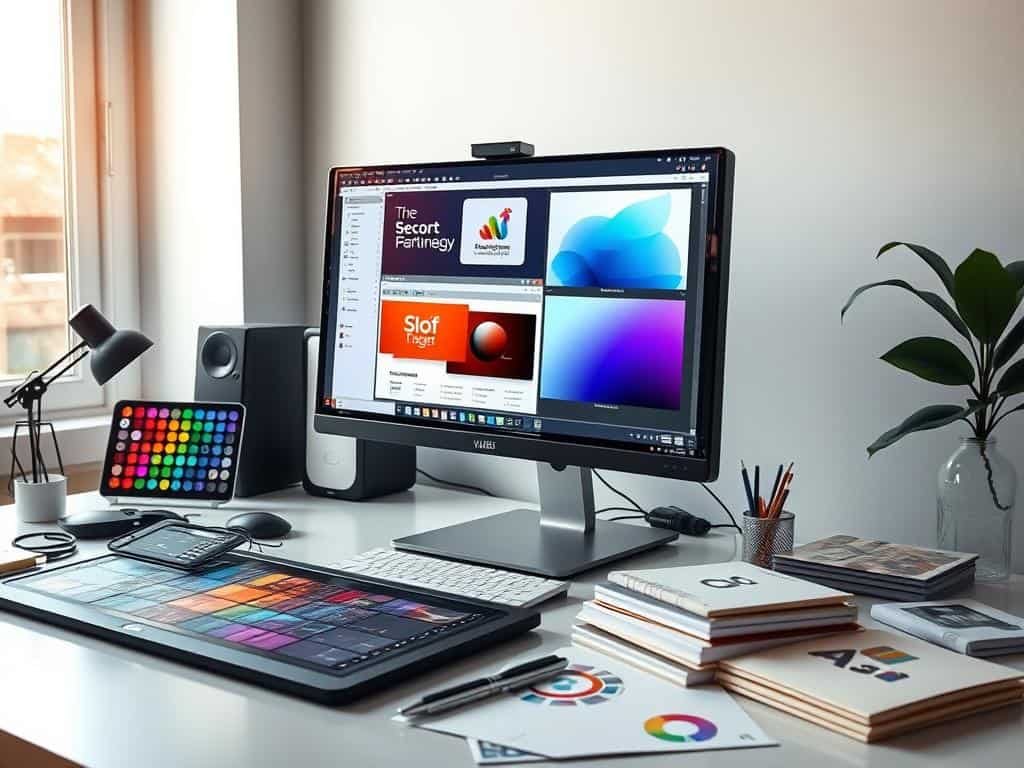
Key Features to Look for in Web Design Software
When looking for web design software, focus on key features that make website building easy and effective. These features should help you create beautiful, smooth-functioning sites. User-friendly interfaces and strong tools make the design process faster.
User-Friendly Interface and Visual Editors
A user-friendly interface is crucial for web design projects. Platforms like Wix and HubSpot let users make amazing websites without much coding. They have visual editors. This lets people drag and drop items easily.
Such ease of use is vital. It keeps visitors from leaving for a competitor’s site.
Compatibility and Template Options
It’s important to have many templates to choose from. Squarespace, for example, offers over 100 templates for different needs, like e-commerce. This saves time and guarantees a professional look. Also, good software works well on all devices. This is key as mobile browsing grows, now over half of web traffic.
AI Integration and Customization Flexibility
AI is changing web design with smart tools for better customization. Webflow and Figma let people work together and tweak designs with no coding. AI makes work fast and keeps designs up-to-date. Security features, like SSL from Shopify, keep data safe. Being device-friendly boosts user interaction.
Conclusion
Choosing the right web design software is key to a solid online presence and building effective websites. It’s vital for any project, be it a personal blog or an extensive e-commerce site. Knowing each tool’s special features is a must. The overview provided earlier points out the need for picking tools that align with your goals. This ensures your site stands out and wins your audience’s trust.
Every software option brings something useful to the table. With the perfect tool, crafting a layout that users love is doable. This is crucial as user-friendly designs boost conversion rates and sales. Also, updating a site is ongoing work. Picking the best software right from the start saves time and money later on.
The web design world keeps changing. Trends like simple designs and engaging interfaces attract more visitors. So, in picking tools, think about what’s working now in design. This includes what looks good and what builds trust. Making the right choice helps me make a website that truly represents my brand.
