Did you know using fill flash can make outdoor portraits way better? It fills shadows in most outdoor shots. This shows how vital flash photography is for well-lit pictures, no matter where you are. Even beginners can make their photos stand out by learning some key flash techniques.
Flash isn’t just for when it’s dark or you’re indoors. It’s key for making your pictures pop, especially during big family dinners or small get-togethers. In this guide, I’ll show you how flash can tell your story in pictures. With easy tips and tricks, we’ll dive into the world of flash photography. It’s a place where every snapshot can be a little bit magical.
Key Takeaways
- Understanding the use of fill flash dramatically enhances outdoor portraits.
- Manual exposure settings offer better control compared to TTL metering.
- Softening light with diffusers can eliminate harsh shadows and create a more flattering look.
- Adjusting flash angles can significantly impact the mood and details of your subjects.
- Combining natural and artificial lighting leads to dynamic and visually balanced photos.
The Importance of Flash Photography for Stunning Images
Understanding light is key to taking great photos. We mainly use two light sources: natural light and artificial light. Each changes an image’s mood and quality. While natural light creates soft, beautiful images, it’s not always reliable, especially in low light. That’s when flash photography comes in handy. It improves photo quality and reduces the need for editing later.
Understanding Natural vs. Artificial Light
Experienced photographers know the pros and cons of natural light. It gives a warm, rich look but isn’t always enough. Artificial light, or flash, helps fix this. In dark places, like weddings or indoor events, flash is essential. It makes pictures brighter and controls shadows. This avoids motion blur and the noise from high ISO settings.
Situations Where Flash Photography Shines
Flash photography is crucial in many cases. For example, outdoor portraits in bright sunlight can have harsh shadows. Fill flash softens these shadows. Indoors, bounce flash can improve lighting by reflecting off walls or ceilings. This avoids weird colors from light bouncing off colored surfaces.
Photographers often struggle with lighting. A speedlight with an umbrella can balance light in backlit settings. This keeps the background pretty while focusing on the subject. Using reflectors or softboxes also helps soften harsh light, making the photo look better.
Mastering shadow control with flash can make photos stunning and dynamic. It lets me be more creative and improve my skills. With flash, I can take unique shots that stand out.
Choosing the Right Flash Equipment
Diving into flash photography requires the right gear for the best shots. I’ve tried many flash models over ten years. My experiences have taught me which equipment works best for on-camera and off-camera flashes.
Types of Flashes: On-Camera vs. Off-Camera
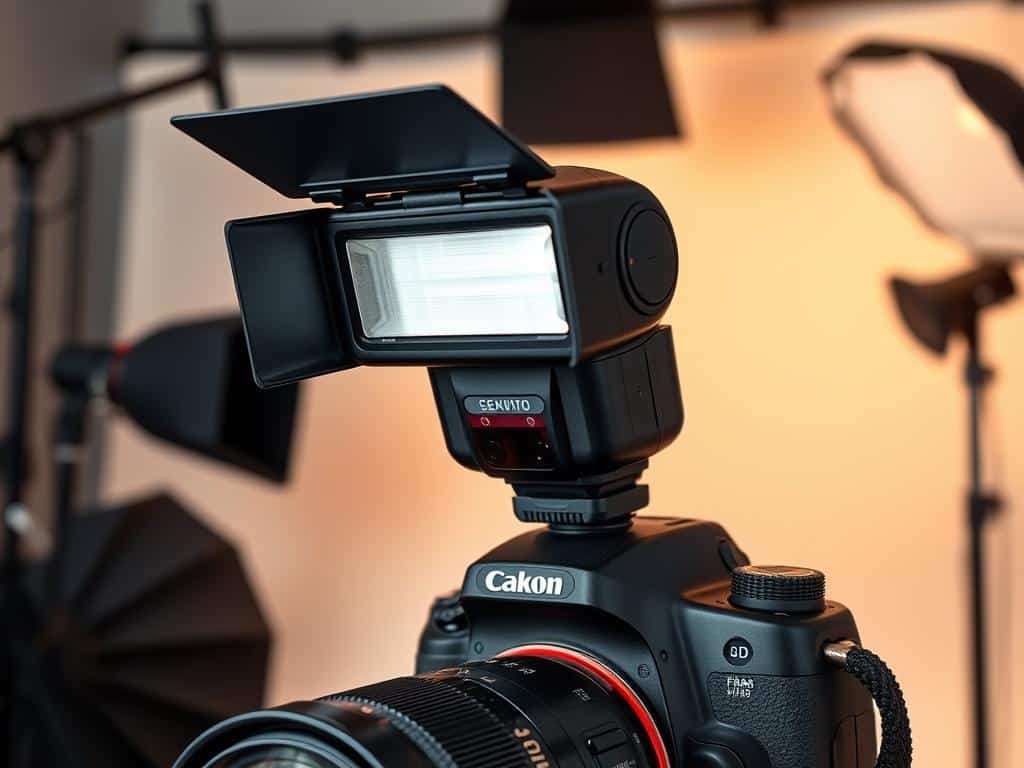
On-camera flashes, like the Nikon SB910 or Canon 600 EX-RT, are great for their ease of use. They suit quick sessions or events well, as carrying lots of gear is hard. On the other hand, off-camera flashes like the Godox V850 allow for more creative lighting. They can be placed far from the subject, making light dramatic and shadows soft.
Key Features to Look for in a Speedlight
When looking at speedlights, check if they match your camera. Pick ones with swivel heads for more light direction control. A strong guide number means better light in tough conditions. Using rechargeable batteries helps shoot faster. I suggest high-quality battery chargers for long-lasting performance.
Recommended Flash Models and Accessories
I recommend top-notch flashes. For Nikon, try the SB-700 or SB-5000. Canon fans might like the affordable YongNuo YN560 III. Diverse light stands aid your lighting setup. Tall stands reach up to 3 meters, while smaller ones are easy to carry. Gear like metal umbrella swivel adapters and cold/hot shoe mounts keep equipment safe. Adding a softbox can also improve your off-camera flash setup.
Mastering Flash Techniques
Improving your flash photography skills is key. Learning to use TTL mode and Flash Exposure Compensation helps make your photos better. Trying out creative flash methods, like fill flash and bounce flash, makes your lighting more interesting. This improves how your photos look.
Utilizing TTL Mode for Consistent Results
TTL mode makes adjusting exposure easy. The camera figures out the right flash level based on the light around. With TTL, I get steady results fast. This is great for quick scenes or changing lights. In TTL mode, I can concentrate on framing my shot, knowing the flash will adjust, whether inside or outside.
Flash Exposure Compensation: Fine-Tuning Your Shots
Flash Exposure Compensation lets photographers control their image lighting better. It’s key for mixing flash light with natural light. By changing the compensation, I avoid too bright highlights or too dark shadows. My photos come out balanced and beautiful. It lets me tweak my images with ease.
Creative Uses of Fill Flash
Using fill flash helps get rid of strong shadows in bright lights. This is especially good for taking pictures of people when it’s sunny or the lighting is intense. By adding a fill flash to my camera, I evenly light up my subject. This avoids too much natural light overpowering the photo, resulting in nicer, softer images.
Leveraging Bounce Flash for Softer Light
Bounce flash changes harsh direct flash into softer, more spread out light. Bouncing the flash off a wall or ceiling makes the light look more natural. It creates a bigger light source that gently lights up the area. This method improves the picture’s mood and quality. It gets rid of the strong shadows usually seen with direct flash.
Conclusion
Mastering flash photography boosts any photographer’s work, from indoor events to evening shoots. This article shared key techniques, like using TTL mode and manual settings, to get great photos. Knowing when to use flash is crucial.
By practicing adjusting aperture and managing ISO, you’ll gain confidence. Though flash photography might seem hard at first, regular practice makes it easier. It’s all about dedication.
Using these methods leads to artistic, eye-catching images. They’ll make your portfolio stand out. Keep experimenting and learning.
