I remember sitting on my bedroom floor at age ten, surrounded by a chaotic sea of half-finished sketches, tangled charging cables, and spilled watercolor tins, feeling like my creativity was being suffocated by the clutter. I used to think that learning how to set up a home art studio meant having a pristine, minimalist sanctuary that looked like it was plucked straight from a high-end design magazine. But here’s the secret I learned after years of mixing code with canvas: a studio isn’t a showroom; it’s a living, breathing ecosystem. It should be less like a sterile laboratory and more like a well-loved kitchen where the ingredients are always within reach and the mess actually tells the story of your progress.
In this guide, I’m stripping away the Pinterest-perfect illusions to give you the real, messy, and beautiful blueprint for building your own creative sanctuary. We aren’t just talking about where to put your desk; we are going to explore how to weave your physical tools and digital tech together into a space that actually fuels your flow. From optimizing your lighting to managing the inevitable “tech-meets-tradition” cable chaos, I’ll share my no-nonsense approach to creating a workspace that feels less like a chore and more like a playground.
Guide Overview
Tools & Supplies
- Drafting table or sturdy desk for a stable work surface
- Task lighting or adjustable LED lamps for visibility
- Storage bins or rolling carts for organization
- Easel for upright canvas work
- Paint, brushes, or drawing media (assorted)
- Paper, canvas, or sketchbook (bulk pack)
- Cleaning supplies like jars, rags, and soap (1 set)
- Protective floor mat or drop cloth (1 unit)
Step-by-Step Instructions
- 1. First, let’s talk about finding your “anchor point”—that physical spot where your magic happens. You don’t need a sprawling loft; even a quiet corner of a bedroom can become a sanctuary. Think of your studio location like the base layer of a digital canvas; it needs to be stable and intentional. Look for a spot that has enough breathing room for your body to move, because if you’re cramped, your creativity will feel just as squeezed.
- 2. Lighting is the secret ingredient that turns a messy desk into a professional workstation. If you can, snag a spot near a window to soak up that gorgeous, natural sunlight, which acts like a natural filter for your soul. However, since the sun loves to play hide-and-seek, I always supplement with adjustable LED lamps. You want light that mimics the clarity of a high-res monitor but retains the warmth of a cozy afternoon, preventing eye strain while you’re deep in the zone.
- 3. Now, let’s curate your “tech-meets-tactile” toolkit. This is where the fusion really happens! You’ll need a sturdy desk that can handle the weight of a heavy drawing tablet and perhaps a few heavy art books. I like to think of my desk as a choreographed stage where my stylus and my physical brushes perform a duet. Make sure you have plenty of accessible power outlets—nothing kills a creative flow faster than a dying battery and a tangled mess of cables.
- 4. Organization is less about being “neat” and more about reducing the friction between your brain and your tools. I’m a huge fan of using clear bins and pegboards; it’s like having a visual directory for your imagination. If you can see your markers, your USB drives, and your sculpting tools at a glance, you won’t waste precious mental energy hunting for them. Treat your organization like a well-written piece of code—everything should have a specific place and a clear purpose.
- 5. Don’t forget the “sensory layer” of your studio. A workspace shouldn’t just be functional; it should be an ecosystem that feeds your senses. This is where you bring in the magic: a curated playlist, a specific scent from a candle, or even a few hardy houseplants to add some organic texture to your digital world. Think of these elements as the ambient soundtrack to your creativity, setting the emotional tone before you even pick up a tool.
- 6. Finally, build in a “buffer zone” for experimentation and mess. Whether it’s a dedicated tray for messy watercolor splashes or a separate digital folder for “ugly drafts,” you need space to fail. If you treat your studio like a pristine museum, you’ll be too afraid to make a mark. Instead, view it as a living, breathing laboratory where every smudge and every glitch is just another step toward something beautiful.
Small Space Art Studio Ideas Dancing Within the Pixels
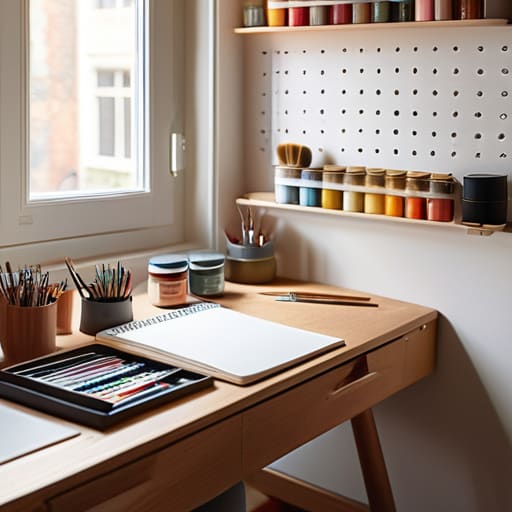
If you’re working out of a cozy corner or a tiny nook in your apartment, don’t let the square footage dim your glow. Think of a compact workspace not as a cage, but as a tightly choreographed dance; every movement needs to be intentional to avoid stepping on your own toes. When exploring small space art studio ideas, I always suggest thinking vertically. Instead of letting your gear sprawl across your desk like spilled glitter, use wall-mounted pegboards or floating shelves. It’s like moving your digital files into organized cloud folders—it clears the “desktop” of your physical world so your mind can actually breathe.
When space is at a premium, your ergonomic art workstation setup becomes your best friend. You don’t need a massive drafting table to find your flow; sometimes, a well-placed laptop stand and a supportive chair are all it takes to keep your body from feeling like a tangled knot of wires after a long session. Focus on quality over quantity by curating only your most-loved tools within arm’s reach. By keeping your immediate perimeter clear, you turn a cramped corner into a high-performance launchpad for your imagination.
Organizing Art Supplies and Tools for a Playful Flow
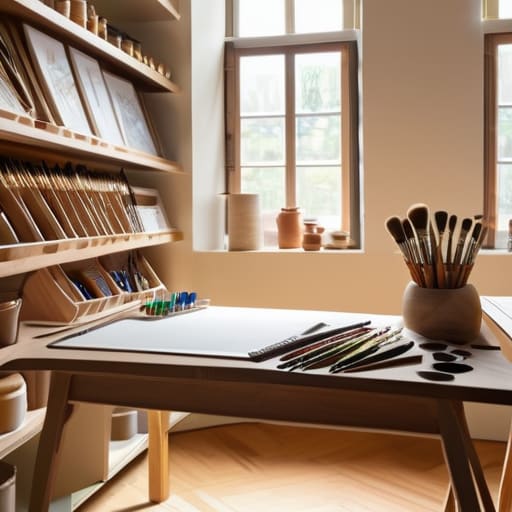
Think of organizing your supplies not as a chore of tidying up, but as choreographing a dance. When you’re deep in a flow state, you don’t want to be stumbling over a rogue stylus or hunting through a mountain of sketchbooks like they’re lost keys in a junk drawer. I like to treat my tools like ingredients in a well-loved recipe; everything needs its own little pantry. By organizing art supplies and tools into intuitive zones—maybe a “digital corner” for your tablet and a “tactile nook” for your brushes—you reduce the friction between your brain’s spark and the canvas.
If you’re working with a tighter footprint, don’t let the clutter stifle your spirit. Use vertical space or rolling carts to keep your essential art supplies for beginners within arm’s reach without swallowing your entire desk. I’m a huge fan of clear bins; there’s something so satisfyingly visual about seeing your colors lined up like a digital spectrum. The goal is to create a workspace that feels breathable and intentional, ensuring that when inspiration strikes, your hands can move as fast as your imagination.
Nurturing Your Creative Ecosystem: 5 Little Rituals for a Big Imagination
- Lighting is your studio’s heartbeat; think of it like the perfect seasoning in a family recipe—too little and everything feels flat, too much and it’s overwhelming. Mix warm ambient lamps for those cozy late-night sketching sessions with bright, daylight-balanced LEDs so your colors don’t pull a disappearing act when you move from screen to canvas.
- Curate a “Digital-Physical Bridge” on your desk. Just as I weave AR layers over physical sculptures, your workspace should allow for seamless transitions. Keep a dedicated spot for your tablet right next to your sketchbook, ensuring that the leap from a stylus to a pencil feels less like a jump across a canyon and more like a gentle stroll through a park.
- Treat your tech like a living garden rather than a static machine. Don’t let your cables become a tangled jungle of stress; use colorful organizers to guide your data and power flows like well-tended garden paths, making it easy to find exactly what you need when inspiration strikes at 2 AM.
- Create a sensory “palette cleanser” station. Sometimes, when the pixels get too loud or the paint gets too messy, your brain needs a reset button. A small corner with a calming plant, a specific scent, or even just a high-quality pair of headphones can act like the quiet intermission in a grand theatrical performance, preparing you for your next act.
- Design for “Iterative Play” by keeping a “Chaos Bin” nearby. Not every idea is a masterpiece, and that’s okay! Have a designated spot for scraps, old wires, and half-finished sketches—it’s the compost of your creative world, where discarded bits eventually turn into the rich soil for your next big breakthrough.
Designing Your Digital and Physical Sanctuary
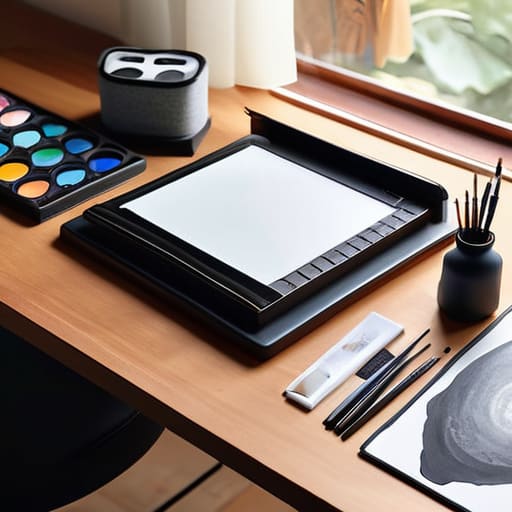
Setting up your studio is so much more than just finding a corner for a desk or a shelf for your stylus; it’s about orchestrating a space where your physical tools and digital dreams can finally shake hands. We’ve wandered through the labyrinth of maximizing tiny corners, dancing through the constraints of small spaces, and finding that sweet, organized rhythm where your supplies don’t just sit there, but actually invite you to create. Whether you are weaving together high-end VR gear with traditional sketchbooks or simply trying to keep your tangled cables from looking like a plate of spaghetti, remember that every choice you make is a brushstroke in the larger masterpiece of your personal creative ecosystem.
At the end of the day, your studio shouldn’t feel like a sterile laboratory or a rigid museum; it should feel like a living, breathing extension of your own curiosity. Think of this space as your very own interactive installation, a place where the boundaries between your imagination and reality are beautifully, intentionally blurred. Don’t worry if it isn’t “Instagram-perfect” right away—the most profound stories often emerge from the messy, beautiful chaos of a work in progress. So, take a deep breath, plug in your sensors, pick up your brush, and go out there to tell your story in ways the world has never seen before.
As you begin to weave these different threads of technology and tactile art together, don’t forget that your environment needs to support your emotional well-being just as much as your technical workflow. Creating a sanctuary isn’t just about where you plug in your tablet or hang your canvases; it’s about fostering a space where you feel completely at ease to explore your most authentic self. Sometimes, finding that sense of connection and liberation—whether through a new hobby or exploring deeper human connections like mature sex geelong—is the secret ingredient that keeps your creative well from running dry. After all, a studio is only as vibrant as the soul behind the screen.