Did you know light painting photography can change how we see photography? A light painting photo won the Photographer’s Choice award at the 2014 Shoot the Hills contest. This shows its big creative impact. This art form uses moving light in long shots, making night photos come alive.
Entering the light painting world, I see the night as a perfect dark canvas. It lets us light up scenes in amazing ways. Light Painting Photography is for all photographers to use their creativity. We turn simple moments into something visually stunning. In this guide, I’ll cover light painting basics, what gear you need, and top tips to make your photos pop.
Key Takeaways
- Light painting turns night photos into beautiful art.
- A moving light source makes long exposure shots better.
- Learning light painting takes practice, skills, and techniques.
- Key tools are a camera with manual settings and lights.
- The Luxli Viola is great for light-painted images.
Understanding the Art of Light Painting Photography
Light painting photography is a mix of art and tech. It lights up a subject in a long exposure shot. This makes each photo a unique piece of art. It’s a kind of night photography that lets photographers use lights in new ways. I can “paint” with light using hand-held sources. This creates amazing scenes full of color and shadow.
What is Light Painting Photography?
This style uses long exposure techniques. With the shutter open for a while, I can catch light moving. It makes images that are full of life and color. Light painting lets me craft my own scenes. It shows the power of night photo techniques mixed with creativity.
Types of Light Painting Techniques
There are many light painting techniques to try out. Traditional light painting lights up parts of a scene with the camera still. Kinetic light painting moves the camera too, blending motion and light. My favorite is point-source light painting. It means lighting specific spots in a photo. These methods change a photo’s feel and meaning.
Benefits of Light Painting Photography
Light painting photography boosts creativity and skills. It pushes me to try new light sources, like flashlights and LED lights. Getting to know my camera better, especially manual settings, makes me a better photographer. It’s also a chance to work with others and learn. We share tips and grow together in night photography.
Essential Equipment for Light Painting Photography
For a great light painting photo journey, you need the right gear. Knowing which camera requirements fit, the best tripod photography setups, and what lighting accessories to use is key. Let’s explore the must-have equipment for top-notch light painting effects.
Camera and Tripod Requirements
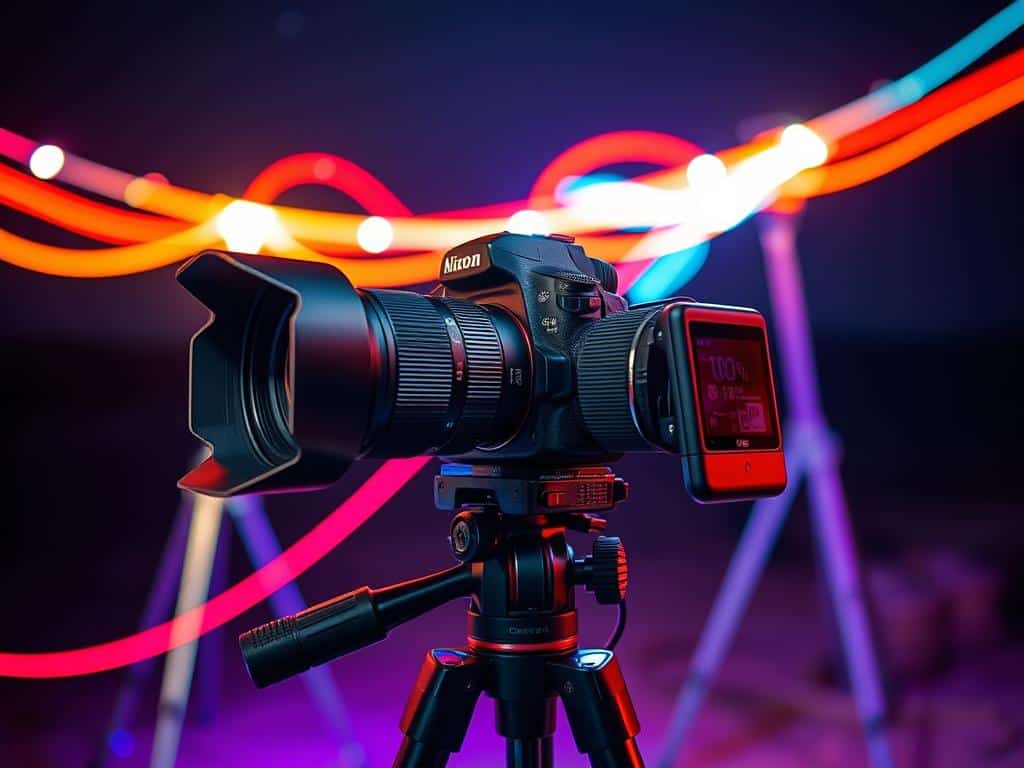
A top-notch camera with manual adjustments is key for light painting. I prefer a DSLR with “Bulb” mode for long exposures at night. A solid tripod is also crucial. It keeps the camera steady, ensuring clear shots over long exposures. Plus, a reliable remote trigger helps a lot. It lets you take photos without shaking the camera.
Lighting Tools and Accessories
Choosing the perfect light painting tools changes your final picture significantly. I use various flashlights, like the bright Coast G26 or the powerful Coast HP7, for great illumination. The Soonfire MX series is my go-to for intense light, and the Nitecore SRT7 offers adjustable brightness and color options. Remember to have plenty of extra batteries and a range of gels for colorful effects.
Setting Up for Success
Planning your light painting setup carefully is essential for great results. I scout locations by day to avoid surprises at night. When preparing for night photography, I meticulously plan the shot composition to highlight my subjects creatively. Then, I adjust the camera settings like ISO and aperture for the best low-light performance. This preparation makes shooting smooth and enhances the overall experience.
Conclusion
Light painting photography is really exciting. It provides a chance for both new and skilled photographers to get creative. You can use it to take normal scenes and turn them into magical visuals at night. With the right skills and tools, anyone can create images that catch everyone’s attention.
Different light painting methods allow for endless creativity. You can use on-camera lights or move lights around to make cool effects. The key is to play around. Whether it’s lighting up a big area or making detailed patterns, you’re only limited by your imagination. Using things like glow sticks or LED lights, you can set the mood of your pictures.
My experience with light painting has taught me a lot about getting ready and showing my unique style. All you need is a good camera, a steady tripod, and the will to try out new things. This special kind of photography lets you capture amazing shots under the stars. Each photo is an opportunity to be super creative and make something that means a lot to you.
