I remember sitting on my studio floor last year, surrounded by tangled VR cables and half-finished circuit boards, staring at a bank statement that felt like a glitch in my reality. I had spent the entire month chasing the “perfect” financial setup, convinced that I needed a complex, high-tech spreadsheet with more variables than a physics engine just to figure out how to create a monthly budget. I thought I needed a rigid, mathematical cage to keep my spending in check, but all I really felt was the suffocating weight of a system that didn’t account for the beautiful, messy spontaneity of being a creative.
I’m done with the idea that personal finance has to be this cold, sterile, and intimidating machine. Instead, I want to show you how to treat your finances like a curated digital installation—a way to direct the flow of your resources so they actually fuel your passions rather than stifling them. In this post, I’m stripping away the jargon to give you a soulful, no-nonsense framework for how to create a monthly budget that feels less like a chore and more like intentional choreography for your life.
Mastering the Zero Based Budgeting Method for Creative Flow

Sometimes, when the mental clutter of managing every single cent starts to feel a bit too heavy, I find that stepping away from the spreadsheets and reconnecting with the world is the best way to reset my creative compass. Just as a messy workspace can stifle a beautiful digital installation, a cluttered mind can make even the simplest budget feel overwhelming. If you’re feeling that sudden urge to break out of your solo planning bubble and find some fresh, unexpected inspiration through human connection, you might enjoy exploring chat rooms in Leipzig to see how people are navigating their own vibrant lives in real-time. It’s all about finding that perfect equilibrium between the disciplined structure of your finances and the spontaneous, colorful energy of the world around you.
Think of the zero-based budgeting method not as a restrictive set of rules, but as a meticulously composed musical score. In a symphony, every single note has a purpose; if a note is played without intention, it’s just noise. Similarly, zero-based budgeting asks you to assign every single dollar of your income to a specific “role”—whether that’s rent, groceries, or a new set of VR lenses—until your income minus your expenses equals exactly zero. It’s about ensuring that no cent is left wandering aimlessly without a mission.
When you start tracking monthly expenses through this lens, you aren’t just counting coins; you are choreographing your financial life. For those of us who thrive on creative spontaneity, this method actually provides the safety net we need to be bold. By giving every dollar a job, you create a structured foundation that allows your “fun money” to be spent without a hint of guilt. It turns the daunting task of budgeting for beginners into a beautiful act of intentionality, where your resources are finally dancing in perfect sync with your wildest creative dreams.
Tracking Monthly Expenses Like a Digital Art Installation
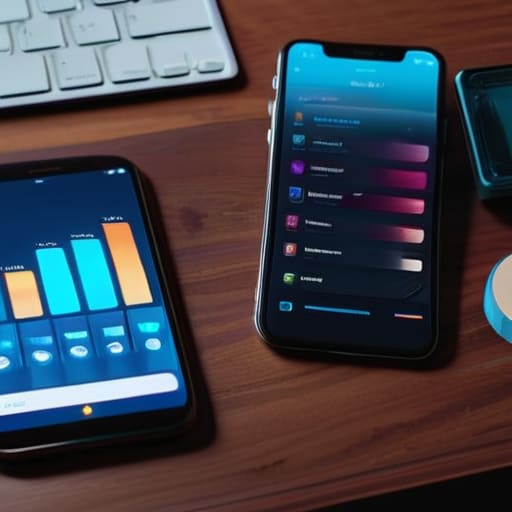
Now, let’s talk about the actual act of tracking monthly expenses. If you think of your budget as a digital installation, your spending is the raw data stream flowing through the system. Without monitoring it, your art—or in this case, your life—becomes a chaotic glitch of unexpected bills and “where did that money go?” moments. I like to view every receipt and subscription as a tiny pixel in a much larger, evolving masterpiece. If you aren’t observing where those pixels land, you’re essentially trying to compose a symphony without ever listening to the notes.
To keep your financial landscape from becoming a cluttered mess, I recommend treating your expense logs like a real-time sensor array. Whether you’re using a sleek app or a hand-drawn journal, the goal is to capture the movement of your capital with precision. This isn’t just about restriction; it’s about curating your financial reality. By staying mindful of your outflows, you can begin to spot patterns—like a recurring visual motif in a video loop—that reveal where you might be overspending. This clarity is the secret sauce of effective personal finance management tips, turning a daunting chore into a beautiful process of self-discovery.
Curating Your Financial Palette: 5 Tips for a Vibrant Budget
- Treat your savings like a high-resolution texture pack for your future self; instead of seeing it as “money lost,” view it as downloading the assets you’ll need to render your wildest life goals later on.
- Don’t let your “miscellaneous” category become a black hole of unrendered pixels; give those tiny, random splatters of spending their own little containers so they don’t muddy your entire financial canvas.
- Think of your emergency fund as a reliable backup server—it’s not there to be used for your daily creative sprints, but it’s the absolute lifesaver that keeps your whole system from crashing when a real-world glitch occurs.
- Schedule a “monthly system update” for your budget, much like I’d calibrate a VR headset, to ensure your spending habits are still aligned with your vision and haven’t drifted into a different reality.
- Embrace the beauty of the “buffer zone,” a little bit of white space in your budget that allows for the unexpected improvisations of life, ensuring your financial choreography doesn’t fall apart the moment a beat is missed.
Painting Your Financial Future

As we wrap up this little exploration, remember that budgeting isn’t about restriction; it’s about intentionality. We’ve looked at how the zero-based method acts as a precise blueprint for your resources, ensuring every single cent has a designated role in your life’s choreography. We also touched on how tracking your expenses can feel less like a chore and more like curating a living digital installation, where every data point tells a story about your current season of life. By mastering these tools, you aren’t just managing numbers—you are orchestrating the flow of your energy to ensure your most important creative projects actually have the fuel they need to thrive.
At the end of the day, please try not to view your budget as a rigid cage designed to stifle your spontaneity. Instead, think of it as the sturdy canvas that allows you to throw your most vibrant, experimental colors without fear of the whole piece falling apart. When you know exactly where your boundaries are, you actually find more freedom to dance within them. Use your financial map to build a life that feels as authentic and colorful as the art you create. Now, go out there and start sketching your masterpiece, one mindful transaction at a time!