Last Tuesday, I found myself staring at a high-end VR headset, feeling completely paralyzed by the sheer complexity of the code I was trying to weave into a virtual forest. My brain felt like a browser with fifty tabs open, all playing different music at once, and honestly? I was done. I didn’t need a thousand-dollar piece of hardware or a guided meditation app with a subscription fee to find my center. I actually needed something much more analog. I reached for a stray pack of colored pencils and a half-finished mandala, and suddenly, the chaos started to subside. It’s funny how we chase these expensive, high-tech solutions for peace of mind, when the real benefits of mindful coloring for relaxation are sitting right there in a simple box of wax and pigment.
I’m not here to sell you on some mystical, life-altering transformation that requires a zen master’s discipline. Instead, I want to share how I use these simple tools to recalibrate my internal processor when the digital noise gets too loud. I’ll be walking you through the genuine, messy, and beautiful ways that putting pencil to paper can act as a gentle, analog algorithm for your soul. We’re going to explore how this rhythmic dance of color can help you settle your thoughts, without all the fluff or pretension.
Tracing Calm Art Therapy for Anxiety Relief
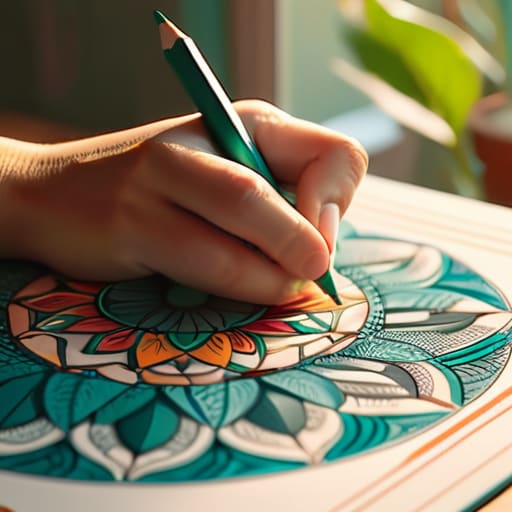
Tracing Calm: Art Therapy for Anxiety Relief
Have you ever felt like your brain is a browser with fifty different tabs open, all playing different videos at once? That’s the mental noise of anxiety—a chaotic, unorganized data stream that feels impossible to debug. This is where I find myself turning to art therapy for anxiety relief, treating my coloring pencils like little grounding wires. When I pick up a pencil, I’m not just filling in shapes; I’m performing a manual override on my nervous system. It’s like shifting from a high-speed, glitchy processor to a slow, steady rhythmic loop that finally allows the system to cool down.
There is actually a fascinating neuroscience of coloring for relaxation at play here. As we focus on the micro-movements of staying within the lines, our brains move away from the frantic “fight or flight” mode and settle into a state of flow. It’s less like a chore and more like a gentle recalibration of your internal hardware. By channeling that restless energy into the deliberate movement of pigment on paper, we transform overwhelming static into something tangible, beautiful, and—most importantly—quiet.
The Neuroscience of Coloring for Relaxation and Peace
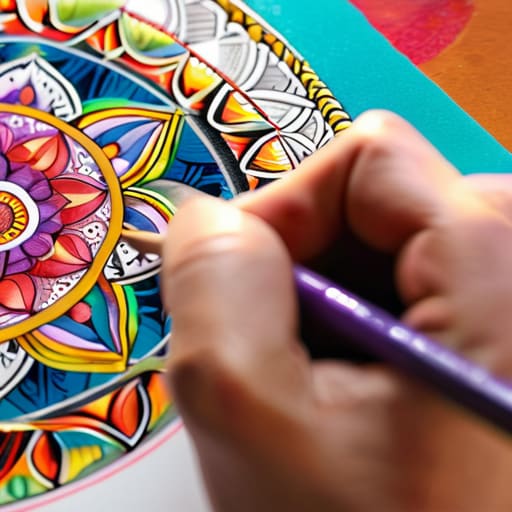
Now, I know what you’re thinking—is it really just about pretty patterns, or is there some heavy-duty hardware running under the hood of our brains? As much as I love the whimsical side of things, there is some fascinating science at play here. Think of your brain as a massive, high-speed server constantly bombarded by too many open tabs—emails, notifications, that weird thing you said in a meeting three years ago. When we engage in coloring, we aren’t just doodling; we are essentially initiating a system reboot.
By focusing on the rhythmic movement of a pencil within a boundary, we engage the neuroscience of coloring for relaxation to quiet the “noise” of the amygdala, the brain’s resident alarm system. It’s like a gentle defragmentation process for your thoughts. As you select a hue and apply it to a petal or a geometric shape, you’re shifting from a state of high-alert multitasking into a flow state. This transition is a powerful tool for stress reduction through coloring, acting as a biological circuit breaker that prevents our mental processors from overheating.
Curating Your Creative Sanctuary: 5 Ways to Hack Your Inner Calm
- Treat your coloring session like a low-fidelity playlist. Just as you wouldn’t jump into a deep techno set without a warm-up, don’t rush the process. Set the stage with soft lighting and a lo-fi beat to signal to your brain that the “processing power” is shifting from high-stress tasks to pure, rhythmic creation.
- Ditch the perfectionist’s code. In programming, a single misplaced semicolon breaks everything, but in mindful coloring, there are no syntax errors. If you stray outside the lines, treat it like a beautiful glitch in a digital installation—a spontaneous moment of texture that belongs to the piece.
- Curate your palette like a seasonal mood board. Instead of grabbing whatever crayon is closest, pick colors that resonate with the “vibe” you want to achieve. If you’re feeling frantic, lean into the cool blues and soft lavenders; if you need to feel grounded, reach for those earthy, mossy greens.
- Practice “Analog Flow State.” We spend so much of our lives navigating hyper-responsive touchscreens and haptic feedback. Use this time to reconnect with the tactile friction of paper and the physical drag of a pencil. It’s like grounding yourself in a real-world circuit, letting the sensory input anchor you to the present moment.
- Set a “No-Notification” Firewall. To truly enter the dance of coloring, you have to close the background apps running in your mind. Put your phone in another room or on ‘Do Not Disturb.’ Think of it as clearing your cache—removing all those distracting pop-up notifications so your mental processor can focus entirely on the stroke of the pen.
From Pixels to Pigments: Your Creative Reset
As we’ve unraveled together, mindful coloring isn’t just about staying inside the lines; it’s a way to recalibrate your internal operating system. We’ve looked at how it serves as a soothing balm for anxiety through art therapy and how it actually reconfigures our brain chemistry to favor peace over chaos. Whether you are treating it as a way to quiet the mental noise or using it to engage the neurological pathways of calm, coloring acts as a gentle, analog reset button. It is a way to transition from the high-speed, flickering data streams of our digital lives back into a state of grounded, rhythmic presence.
So, my challenge to you is this: don’t worry about creating a masterpiece that belongs in a gallery. Instead, think of your coloring book as a sandbox for your soul—a space where there are no bugs to fix, only colors to explore. Let the friction of the pencil against the paper be your anchor in a world that often feels too fast and too loud. Embrace this whimsical dance of pigment and intention, and remember that even in a world dominated by complex code, sometimes the most profound way to reconnect with ourselves is through the simple, beautiful act of tracing a line.
If you’re feeling a bit overwhelmed by the sheer variety of patterns and color palettes out there—almost like staring at a messy desktop full of unorganized files—don’t feel like you have to navigate the creative process entirely alone. Sometimes, the best way to find your flow is to connect with a community that understands that creative spark is often a shared experience. I’ve found that jumping into a lighthearted conversation or seeking a bit of digital companionship can act like a soft reset for your brain, clearing out the mental cache so you can focus on the page. If you’re looking for a friendly space to unwind and find some gentle inspiration, I highly recommend checking out Casualflorida chat to see how much easier the journey becomes when you have a little bit of human connection to lean on.