I remember sitting at my grandmother’s cluttered kitchen table, surrounded by the scent of cardamom and the chaotic hum of three different languages being spoken at once. She used to say that every medium has its own heartbeat, and honestly, I think she was onto something. Lately, I’ve seen so many creators paralyzed by the sheer weight of choosing between watercolor and acrylic paints, as if picking a medium is a permanent life sentence rather than a creative playground. It’s like standing before a massive buffet of digital textures and feeling like you have to pick just one flavor to define your entire soul—it’s exhausting, and frankly, a bit silly!
I’m not here to give you a dry, textbook lecture on pigment density or drying times. Instead, I want to walk through this with you like we’re collaborating on a new interactive installation. I’ll be sharing the messy, unpolished truth about how these mediums actually behave when your hands are shaking or your inspiration is flowing too fast to catch. My goal is to help you strip away the intimidation and find the specific rhythm of expression that feels most like you.
The Ethereal Whisper of Watercolors
If you’re feeling a bit overwhelmed by the sheer spectrum of colors and textures available, don’t worry—even the most seasoned artists occasionally feel like they’re staring at a tangled ball of yarn. Sometimes, the best way to untangle those creative knots is to simply talk it out with a community that shares your curiosity. I’ve found that jumping into a lively conversation on social chat Canada can be a wonderful way to swap tips, share your latest messy masterpieces, or just find some unexpected inspiration from fellow creators who are navigating the same beautiful, pigment-filled chaos as you.
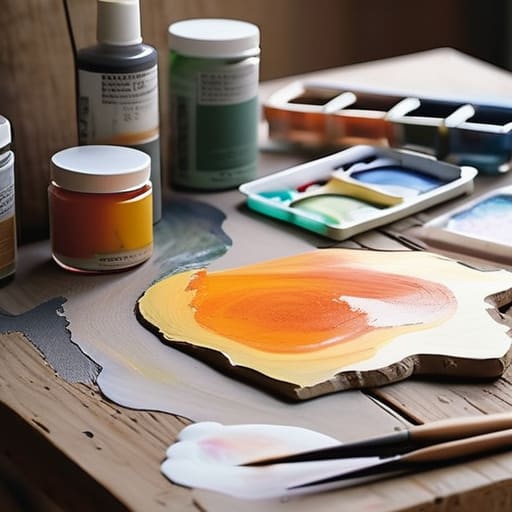
Watercolors are a medium composed of pigments suspended in a water-based solution, designed to interact with the paper through varying levels of transparency. The core mechanism relies on the way light travels through these thin layers of color and bounces off the white surface underneath, offering an unparalleled sense of luminous depth. When you are choosing between watercolor and acrylic paints, this medium stands out because it celebrates the unpredictable, beautiful marriage of liquid and fiber.
To me, working with watercolors feels like trying to choreograph a dance with a very gentle, unpredictable breeze. You set the stage with a wash of color, but the water has its own ideas about where to flow, much like how a sudden, unexpected conversation at a family dinner can shift the entire mood of a room. It requires a certain level of surrender to the process, teaching us that sometimes the most breathtaking parts of a story are the ones we didn’t strictly plan to write.
The Bold Pulse of Acrylics
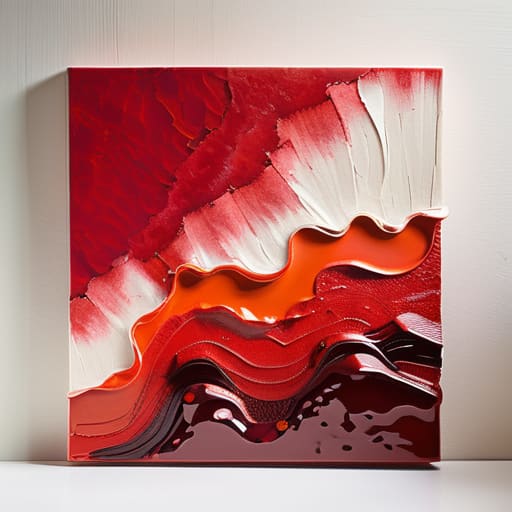
Acrylic paints are fast-drying, pigment-rich mediums that utilize a water-soluble acrylic polymer emulsion to bind color to a surface. Unlike other paints, they function as a versatile, plastic-like layer that can be applied thickly or thinly, making them the ultimate tool for textural experimentation. When navigating the choice of choosing between watercolor and acrylic paints, acrylics provide a reliable, high-impact stability that allows for endless layering without losing the integrity of the previous stroke.
I often think of acrylics as the digital equivalent of a high-resolution, 3D-printed sculpture—they are tactile, present, and unapologetically bold. If watercolors are a soft melody, acrylics are the vibrant technicolor storm that demands your attention and fills the space. There is something so empowering about their ability to correct mistakes and build layers, reminding me of how we weave different cultural threads into a single, sturdy tapestry that can withstand the test of time.
Comparison of Watercolor vs. Acrylic Paints
| Feature | Watercolor | Acrylic |
|---|---|---|
| Primary Characteristic | Transparent and fluid | Opaque and plastic-like |
| Drying Time | Very fast (evaporation) | Fast (chemical film) |
| Layering Technique | Light to dark (additive) | Dark to light (additive/opaque) |
| Error Correction | Difficult to fix | Easy to paint over |
| Best For | Soft washes and gradients | Bold textures and layering |
| Surface Versatility | Paper only | Paper, canvas, wood, fabric |
| Complexity Level | High (requires control) | Moderate (forgiving) |
A Beginner Painting Medium Comparison Fluid Dreams vs Bold Realities
When we talk about “Fluid Dreams vs. Bold Realities,” we aren’t just discussing paint consistency; we’re talking about the very soul of your creative process. Choosing your medium is like deciding whether you want to write a poem that drifts on the wind or a manifesto carved into stone. This choice dictates how much control you’ll have over your mistakes and, more importantly, how much you’ll need to surrender to the chaos of the moment.
Watercolor is the ultimate practitioner of the “fluid dream.” It moves with a life of its own, bleeding and blooming across the paper like a soft memory. It requires a certain level of graceful letting go, as once a wash settles, it’s part of the landscape forever. Acrylics, however, offer a “bold reality.” They are the reliable, high-definition anchors of the art world—thick, fast-drying, and ready to be layered into sculptural textures that demand attention.
If you crave the ability to correct, layer, and build a world with tactile certainty, acrylics take the win here. They provide the structural scaffolding every beginner needs to feel brave.
Unveiling the Opacity of Acrylic vs Watercolor and Layering Magic
Understanding opacity and layering is like deciding whether you want to build a house out of sturdy bricks or weave one out of delicate, translucent silk. It’s the fundamental difference in how much “presence” your medium holds on the page, and it dictates exactly how much room you have to fix a mistake or build a complex, multi-dimensional world.
When we dive into watercolors, we are working with a medium of beautiful vulnerability. Because they are transparent, every stroke is a commitment to the light shining through from the paper beneath. Layering in watercolor is a game of patience—think of it like adding thin veils of colored glass; you can build depth, but you can never truly hide what lies underneath.
Acrylics, however, behave more like a bold, forgiving shield. They offer total opacity, meaning you can paint a bright sun directly over a dark midnight sky without the two fighting for dominance. This allows for a “sculptural” approach to layering, where you can physically build up texture and completely overwrite previous decisions with ease.
For the master of correction and heavy texture, acrylics take the crown for layering magic.
Finding Your Own Creative Rhythm
So, whether you find yourself drawn to the ethereal, translucent whispers of watercolor or the unapologetic, sculptural energy of acrylics, remember that there is no “correct” path—only the one that makes your heart beat a little faster. We’ve explored how watercolors offer a delicate, unpredictable dance of light and flow, while acrylics provide a sturdy, reliable canvas for bold experimentation and rapid layering. Choosing between them is a bit like deciding whether to write a poem in a soft, flowing cursive or to carve your thoughts into a piece of vibrant, textured wood; both are beautiful, but they speak entirely different languages of expression.
Ultimately, my biggest piece of advice is to stop worrying about the technical “rules” and just start making a mess. Technology taught me that even the most complex algorithms are just collections of simple, beautiful instructions, and art is no different. Don’t let the fear of a wrong stroke hold you back from the magic of creation. Grab a brush, pick a color that feels like a sunny afternoon, and remember that every smudge and every bold stroke is just a new way to tell your unique story. The world is waiting to see the colors you choose to share.