The augmented reality (AR) market is on a fast track to grow big. It’s expected to jump from $32.1 billion to over $300 billion by the 2030s. That’s a growth rate of 33.5% a year! This growth shows us how AR is changing our everyday life. By mixing real and digital experiences, AR is becoming a key part of many industries’ future.
AR is changing the way we use our mobile devices. Big companies like Meta and Apple are improving their AR products. This makes it easier for us to use and benefits us in new ways. It’s important to keep up with AR trends to remain relevant in this fast-changing tech world.
Key Takeaways
- The AR market is projected to exceed $300 billion by the 2030s.
- 1.7 billion mobile AR users are expected globally by 2024.
- Android holds 70.71% of the mobile OS market share as of Q1 2024.
- AR is revolutionizing shopping experiences, with 60% of shoppers favoring AR-enhanced shopping.
- AR technology is anticipated to significantly enhance educational engagement by 2024.
The Present and Future of AR Technology
Looking back at AR technology history shows us the exciting journey of innovation. From its early days in the 1900s to the advanced software of today, AR’s growth is remarkable. Companies like Meta and Apple have led the way. They’ve taken AR from experimental ideas to something we use every day.
Overview of Augmented Reality’s History and Evolution
The tale of AR technology history is full of big leaps in tech and demand. The use of mobile devices and better hardware has pushed AR into many fields. Now, AR is not just an idea but a tool that helps in healthcare, education, and online shopping. It’s changing how we interact with the world.
Current Market Size and Growth Projections
The AR industry is booming, valued at about $13.8 billion in 2022. Experts think it will grow fast, reaching $50.9 billion by 2026. The software part of AR/VR is also set to jump from $14.5 billion in 2023 to $65 billion in 2033. With over a billion users of AR devices in 2022, more and more people are getting into AR.
Many industries are realizing how AR can change the game. The digital luxury fashion market is one such sector, expected to grow to $56 billion by 2030. There are still hurdles like tech limits and privacy worries, but these challenges only push for more innovation. They shape the future path of AR’s market growth.
Augmented Reality Trends: AI and AR Integration
The blend of AI with AR is changing how we use digital content around us. It makes AR applications smarter, improving how we experience digital worlds. By processing a lot of data, these smart applications offer unique experiences to users.
How Artificial Intelligence Enhances AR Technologies
AI is key in making AR technology better. It helps in understanding scenes and recognizing objects more accurately. Such improvements make scanning people and reading text in real-time easier. With AI, AR can even fix problems automatically, making things more efficient. The future looks promising, with AI making AR feel like a part of our real world.
Examples of AI in AR
IKEA and Apple are leading the way in AI-powered AR. IKEA lets customers see how furniture looks at home before buying. Apple’s Vision Pro provides a tailored, engaging experience. These innovations are changing shopping and healthcare by making interactions more meaningful. As AR meets other technologies like IoT and 5G, we’ll see even cooler applications.
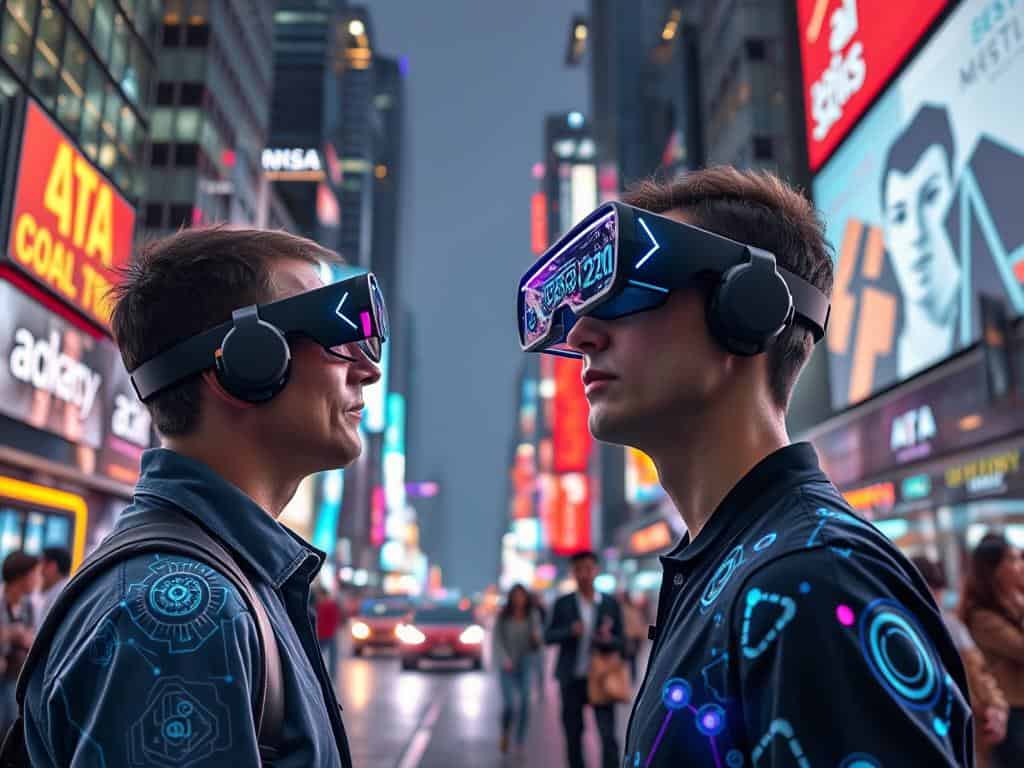
The Expansion of Mobile Augmented Reality
Mobile augmented reality (AR) leads the way for AR applications today. Thanks to tech advancements and more smartphone users, mobile AR has grown a lot. By 2024, it’s expected that 1.7 billion people will be using mobile AR. This shows a huge market for developers and companies to explore.
Mobile as the Dominant Platform for AR
Right now, mobile AR holds about 30% of the global AR market. In 2023, mobile AR’s market value was about US$ 4.2 billion. Experts think this will jump to US$ 31.5 billion by 2033. That’s a huge growth of 22.1% each year. This growth shows that smartphones are key to bringing AR to people. It also shows there’s a big demand for mobile AR apps that can engage users well.
Innovations in AR Development Tools
Tools like Google’s ARCore and Apple’s ARKit have changed mobile AR a lot. They let developers make more immersive and useful apps. With updates, these tools now support instant AR placement and tracking real-world objects. As 5G becomes more common, it will make mobile AR even better. It will allow for smoother integration in different settings.
Conclusion
Looking back at augmented reality (AR), we’re at a key point in its story. The future of AR aims to change industries like retail, healthcare, and education deeply. It’s eye-opening to see predictions showing AR’s market growing from $62.75 billion in 2023 to about $1,869.40 billion by 2032. This signals a big chance for businesses to dive into new innovations and stay ahead.
Combining AR with artificial intelligence and mobile tech seems really exciting. These advances could make experiences more lifelike across gaming, learning, and health. Big players like Google, Apple, and Qualcomm are working hard to lead these changes. They’re shaping how AR will be used everywhere.
But, AR’s rise also brings up concerns, like mental health and privacy issues. It’s crucial for the industry to deal with these responsibly while moving forward. I believe augmented reality will keep merging our digital and physical spaces. It’ll improve how we connect, learn, and interact with the world around us.
