I remember standing in my first studio apartment, staring at a countertop that felt less like a workspace and more like a glitchy, overcrowded desktop where I couldn’t find a single icon. I was trying to whip up a simple cardamom chai—a recipe that usually feels like a warm hug—but instead, I was playing a high-stakes game of Tetris just to find a teaspoon. It’s frustrating because the internet loves to sell you these expensive, aesthetic acrylic bins that promise to solve everything, but let’s be real: those are often just expensive Band-Aids for a deeper spatial logic problem. Finding the best ways to organize a small kitchen shouldn’t require a massive budget or a minimalist lifestyle that leaves you hungry; it should be about mastering the choreography of your own movements.
I’m not here to pitch you a lifestyle brand or a collection of overpriced gadgets. Instead, I want to share how I applied a bit of digital design logic to my own culinary chaos to create a space that actually flows. We’re going to dive into practical, tactile strategies that treat your cabinets like a well-coded interface—streamlined, intuitive, and deeply personal. By the end of this, you’ll have a toolkit of real-world hacks to turn your cramped cooking nook into a functional masterpiece of creative efficiency.
Maximizing Cabinet Space Through Digital Precision
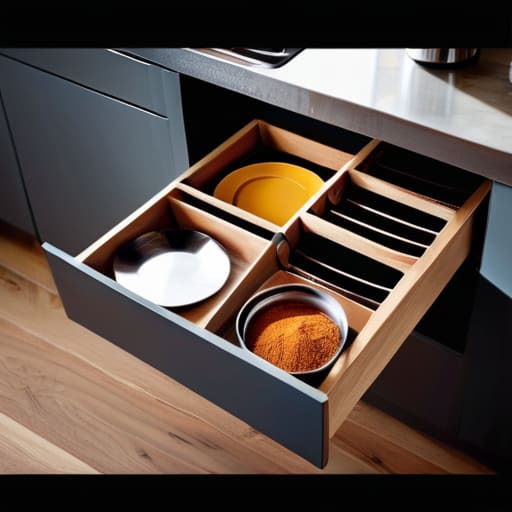
Think of your kitchen cabinets not as static wooden boxes, but as a complex database where every shelf is a precious bit of storage memory. When we’re working with limited square footage, we can’t afford any “dead pixels” in our layout. To truly master maximizing cabinet space, I like to approach it like optimizing a piece of code: we need to eliminate the clutter that slows down our daily processing speed. Instead of stacking heavy pots haphazardly—which is essentially like a messy file directory—I use tiered organizers to create layers. This way, every spatula and saucer has its own dedicated address, making retrieval as seamless as a well-oiled algorithm.
If your cabinets feel like they’re hitting a capacity limit, it’s time to look toward vertical storage ideas for kitchens. I’m a huge advocate for using the “z-axis” of your cupboards. By installing pull-out bins or even tiny tension rods, you’re essentially adding extra sub-directories to your system. It’s about transforming that empty air between shelves into functional, high-density storage zones, ensuring that even the smallest apartment kitchen feels like a sprawling, high-performance studio.
Countertop Decluttering Strategies for Minimalist Artistry
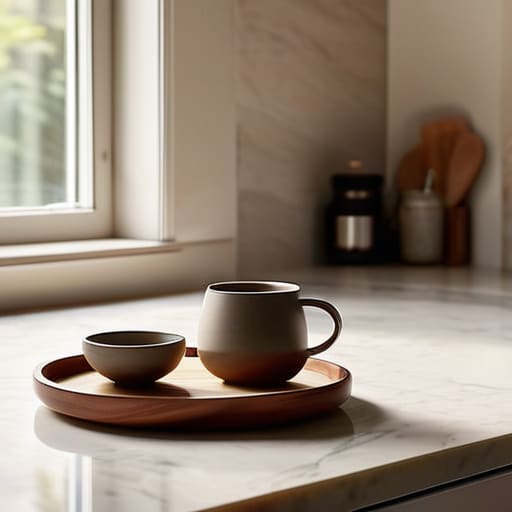
If your cabinets are the hard drive of your kitchen, then your countertops are the glowing, high-resolution interface—the part you actually interact with every single day. When that surface is cluttered with mismatched canisters and stray utensils, it feels like trying to paint on a canvas that’s already covered in scribbles; you just can’t find the focus. To reclaim that sense of calm, I like to treat my countertop decluttering strategies like a curated gallery exhibition. If an appliance hasn’t seen the light of day in a week, it shouldn’t be taking up prime real estate. Instead, tuck those heavy mixers away and let only the “hero pieces”—the ones that truly elevate your daily ritual—remain on display.
For the items that simply must stay within arm’s reach, I’ve found that embracing verticality is a total game-changer. Think of it as adding a new dimension to your workspace. Using magnetic knife strips or sleek tiered spice racks allows you to lift your essentials off the surface, turning a flat, crowded plane into a multi-layered landscape of utility. These kinds of vertical storage ideas for kitchens act like the scaffolding of a digital installation: they provide the necessary structure to support your creativity without obstructing the view.
The Micro-Kitchen Symphony: Five Movements Toward Spatial Harmony
- Treat your vertical space like a digital canvas. If your counters are full, look up! Installing floating shelves or magnetic knife strips is like adding extra layers to a Photoshop file—it gives you more room to work without cluttering the base layer.
- Curate your tools like a museum collection. Not every whisk and spatula needs a starring role in your daily performance. If a gadget hasn’t “performed” in six months, it’s time to archive it in deep storage or pass it on to a new curator.
- Use modular containers to turn chaos into a structured grid. Think of clear, stackable bins as the neatly organized code behind a beautiful interface; they might be invisible at first glance, but they keep the entire system from crashing when things get busy.
- Master the art of the “drawer choreography.” Use dividers to give every utensil its own dedicated lane, much like how I map out movement paths in a VR installation. When every item has a predictable rhythm, you’ll never find yourself frantically searching for the garlic press mid-sauté.
- Embrace the magic of multi-functional objects. In a small kitchen, every piece should be a “Swiss Army knife” of utility. A heavy ceramic bowl isn’t just for fruit; it’s a dough proofing vessel, a salad bowl, and a sculptural centerpiece all rolled into one.
The Final Composition
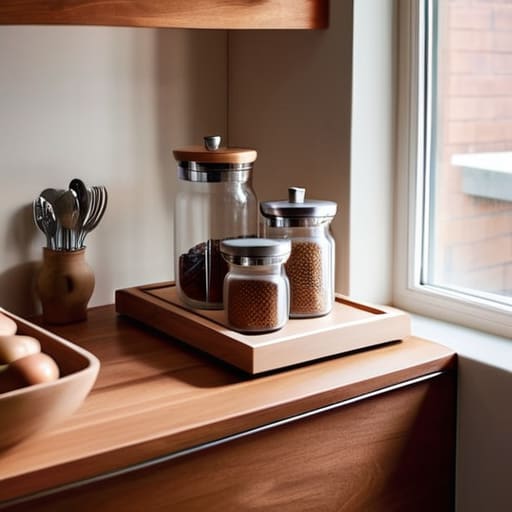
As we wrap up our little deep dive, remember that organizing a small kitchen isn’t just about shoving spice jars into corners; it’s about mastering the spatial choreography of your most vital creative hub. We’ve looked at how to treat your cabinets like a well-coded database, ensuring every utensil has its designated address, and how to treat your countertops like a minimalist gallery where only the most essential tools take center stage. By applying a bit of digital precision to your physical shelves and a dash of artistic restraint to your surfaces, you transform a cramped cooking zone into a seamlessly integrated system that breathes with you rather than against you.
At the end of the day, your kitchen is much more than a collection of appliances and ingredients—it is the heartbeat of your home and a canvas for your sensory experiments. Don’t let the fear of a messy drawer stop you from experimenting with a new recipe or hosting a late-night conversation over tea. View these organizational tweaks not as chores, but as the foundational brushstrokes that prepare your workspace for the beautiful, delicious chaos of life. Whether you’re a seasoned chef or a weekend tinkerer, may your kitchen always be a space where function meets whimsy, allowing you to cook, create, and connect with effortless grace.
While we’re fine-tuning the physical geometry of our kitchens, I often find that the most important part of any creative space is the social energy that flows through it. Just as a well-organized pantry provides the ingredients for a feast, finding your community provides the inspiration for a life well-lived. If you ever find yourself craving a bit of digital connection or a space to exchange ideas while you’re dreaming up your next culinary masterpiece, I’ve found that exploring chat rooms in Calgary can be a wonderful way to tap into that vibrant local pulse and find kindred spirits who appreciate the art of conversation as much as the art of a perfectly plated meal.