Cities like Los Angeles and Chicago are full of spots perfect for time-lapse photography. Time-lapse can turn simple moments into stunning visuals, making seconds worth hours. Over eight years, I’ve learned the importance of choosing the right subjects, framing shots well, and using the correct camera settings.
To capture the sun’s journey or the city’s pulse, mastering these basics is key. This will help you make time-lapse videos that truly captivate your audience.
Key Takeaways
- Time-lapse photography fundamentally changes how we perceive motion, allowing for artistic expression.
- Optimal shooting times, such as the Golden Hour, greatly enhance visual quality.
- Understanding intervals is crucial when capturing different subjects, greatly affecting the final output.
- Professional-grade cameras and tripods are essential for quality results in time-lapse videography.
- Proper preparation, including cleaning gear and ensuring adequate power, prevents disruptions during shoots.
Understanding Time-lapse Photography
Time-lapse photography captures images at set intervals. It makes fast sequences that show movements usually too slow for us to see. By taking many still images and making them into a video, time-lapse shows detailed views of things like flowers blooming or cities changing. This video photography gives us a special look, showing the beauty and detail of our world.
What is Time-lapse Photography?
Time-lapse photography makes slow events quick and easy to watch. It captures pictures less often than they are played back, making things seem to move fast. It started in 1872 with Eadweard Muybridge studying horse movements. The first big use in movies was in 1897 by Georges Méliès. Now, time-lapse is a favorite way to show everything from nature growing to city life.
The Benefits of Time-lapse Photography
Time-lapse photography has many advantages. It lets photographers and filmmakers show long events quickly, which keeps viewers interested. Watching the slow change from day to night becomes exciting. It lets us see things like plants growing or cities bustling, adding depth to stories. Plus, digital tools have made time-lapse easier for everyone around the world to try.
Essential Equipment for Capturing Time-lapse Videos
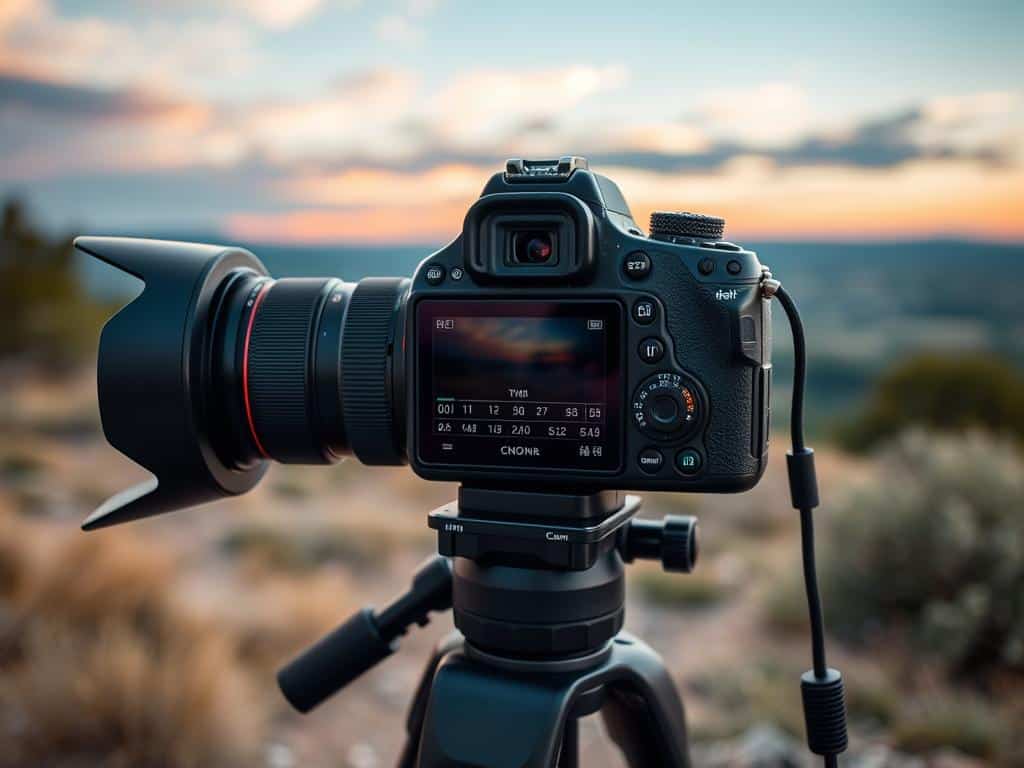
Selecting the right gear is crucial for stunning time-lapse videos. Your choice of camera, lens, and tripod affects both quality and shooting ease. Knowing the essentials helps you make the most of time-lapse tricks.
Choosing the Right Camera
For time-lapse, DSLRs or mirrorless cameras are best because of their quality and flexibility. Consider models like the Canon 60D or Canon 5D Mark III for their great performance and image clarity. Even basic cameras can shine, so pricey gear isn’t a must. Budget-seekers might find value in used gear without sacrificing video quality.
Lenses and Tripods: What You Need
A sturdy tripod is key for stable, long-term shoots. A good tripod boosts consistency in your time-lapse work. I often choose wide-angle zoom lenses for their scene adaptability. An intervalometer, which sets shot timing, can really level up your work. Don’t forget extra batteries and SD cards to keep filming smooth.
Key Camera Settings for Time-lapse Photography
Time-lapse photography looks amazing if you get the camera settings right. I prefer using manual mode. It lets me control the exposure fully. This keeps the lighting consistent during the shoot. Auto settings might cause flickering because of changes in ISO or shutter speed.
Manual Mode: Why It’s Important
Manual mode is key for time-lapse. It lets me keep the exposure steady, even when light changes. This is essential during shifts from day to night. It stops the brightness from changing between shots. This ensures the video looks smooth.
Shutter Speed, Aperture, and ISO Explained
To get the best time-lapse results, know your camera settings. For day to night shots, I set the ISO at 100. I choose an aperture from f/6.3 to f/8. Then, I adjust the shutter speed. This approach prevents the sky from being too bright in the shots. It’s key when the light changes a lot.
Interval Selection for Different Subjects
Selecting the right interval is crucial. For quick-moving things like cars, short intervals are best. But, for slow changes like clouds moving, longer intervals are fine. I go for a 5 to 8-second interval for day-to-night shots. This makes a video that lasts 20 to 30 seconds. For longer shoots, 9 to 10-second intervals help reduce the total photos taken.
Conclusion
As we end our journey into time-lapse photography, it’s key to note that making amazing videos takes three things. You need the right subject, equipment, and camera settings. This mix lets us show the beauty of time in a few seconds. It uncovers changes and patterns hidden from our eyes.
Making time-lapse videos takes lots of effort and time, but the outcome is worth it. Picking the right gear, like the Tikee mini camera or a trustworthy DSLR, matters a lot. A good tripod and intervalometer are also crucial. These tools help me capture clear, creative shots.
Managing light and the environment when shooting is important. So is careful editing after. Doing these well leads to great results. Time-lapse photography lets us share the wonder of our world. It makes my storytelling richer. It turns landscapes and events into inspiring virtual tours. Each video I make pushes my creativity further, improving my skills and my video portfolio.
