Did you know the Bayeux Tapestry is almost 200 feet long? It captures the 1066 conquest of England. This shows the lasting impact and creativity of textile arts. I’ve learned that this art includes many techniques. They are sewing, weaving, and embroidery. These cater to beginners and experts alike. The world of fabric art is full of life and welcomes everyone.
The more I explore crafting, the more possibilities I find. I can turn fabric scraps into cool bags, wallets, or decor. Sites like Pinterest offer endless inspiration. They showcase various designs and methods. Textile art lets me express myself. It connects me to its rich history and cultural importance. This makes it one of the most thrilling types of contemporary art.
Key Takeaways
- Textile art includes diverse practices: sewing, knitting, weaving, and embroidery.
- The Bayeux Tapestry is a remarkable historical example of artistic textiles.
- Platforms like Pinterest provide vast inspiration for DIY textiles.
- Textile arts encourage personal expression and innovation.
- Contemporary textile artists continue to push the boundaries of the medium.
The Rich History of Textile Art
The journey of textile art is a fascinating story. It stretches through cultures, societies, and innovation. Its beginnings, from clothing to blankets, go back 100,000 to 500,000 years. This early phase shows the importance of fabric techniques. They were not just useful but also had deep cultural meanings. Communities added special designs and valuable materials like beads and shells to their textiles. This highlighted the bond between art and culture.
Ancient Techniques and Cultural Significance
The oldest carpet, the Pazyryk Carpet from the 5th century BC, shows Persian craftsmanship. These pieces reveal the *cultural significance of textiles*, blending beauty and usefulness. The Ardabil carpet from 16th century Persia had a symmetrical design. It symbolized harmony and balance. Textile art evolved through weaving and other methods. The Silk Road trade routes played a key role in spreading these techniques globally.
Textile Art Through the Ages
Medieval times saw the growth of textile art, with masterpieces like the Bayeux Tapestry merging story and art. The Industrial Revolution was a turning point. It introduced machines like the power loom, changing everything. This era led to major shifts. Artists like William Morris from the Arts & Crafts movement championed handmade quality. His work focused on the integrity of design, a value still appreciated today.
Contemporary Textile Artists
Today, artists like Anni Albers and Sonia Delaunay have pushed boundaries in textile art. They’ve shown its potential in modern art through innovative work. Social media has helped *contemporary textile practices* reach more people. Artists now mix media and technologies, such as AI and conductive yarns. Vanessa Barragão focuses on eco-friendly themes. Meanwhile, Maria Hupfield combines modern Indigeneity with textile art. This shows the evolving and dynamic nature of *modern fabric creations*. It encourages artists to explore new ideas.
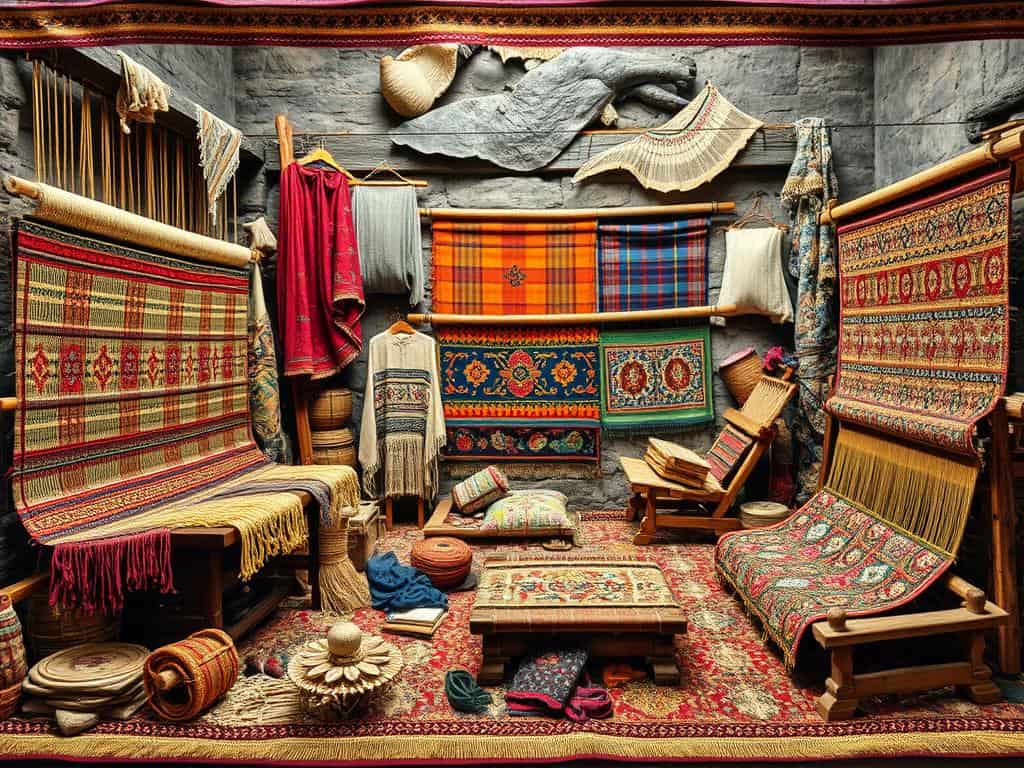
Exploring Creative Designs in Textile Art
In my textile art journey, choosing the right textile art materials is crucial. I focus on quality materials like cotton, linen, and silk. They make a big difference in the outcome. Textured cottons, such as broderie anglaise or Dobby, are my favorites. They improve the look and use of my work.
Materials and Tools for Every Skill Level
Getting the correct tools for beginners is key in DIY textile crafting. Everyone starts with basic tools – fabric scissors, markers, and needles. They help you kick off simple projects. As I get better, upgrading to advanced tools helps a lot. Tools like sewing and embroidery machines make my work finer and more creative. Keeping everything organized and tools in shape is also important. It helps me keep improving my fabric skills.
Techniques to Enhance Your Textile Art Skills
Learning different textile art techniques helps me grow as an artist. I start with basics like appliqué and collage. They’re great for building skill. Then, I try more creative actions like free motion embroidery and monoprinting. They bring new layers to my work. Using fabric paints, such as Pebeo Setacolor and Memory fabric paints, adds more depth. Techniques like using a feather for scratching or a sponge for tapping create cool patterns.
Adding mixed media makes my projects stand out. It pushes me to try new things and grow my unique style. Exploring fabric paints, both opaque and shimmer types, turns my pieces into vibrant expressions of myself. Projects like wall hangings or quilts mark the high points of my skill advancement.
Conclusion
Exploring textile art is a journey filled with inspiration. Its history is rich, going back to ancient civilizations like Egypt and Greece. These cultures show us how textile art can tell stories and share wisdom.
Playing with fabrics shows how anyone can express themselves, no matter their skill level. I’ve found weaving and quilting to be especially expressive.
My own exploration has opened my eyes to the importance of different materials. This includes natural ones like cotton and wool, and also synthetics. Artists like Sheila Hicks and Faith Ringgold teach us that textiles are a true form of art. I’m eager to see where sustainability and innovation will take us.
In closing, diving into textile arts has been rewarding. It’s not just about the skills I’ve picked up. It’s also about the stories I can tell through my creations. This journey connects us to a larger world, inviting us to keep exploring and creating. Every stitch is a link to our shared history and diverse communities.
