The other day, I was sitting in my favorite corner cafe, staring at the same chipped ceramic mug and watching the same grey drizzle hit the pavement, when it hit me: I had become a victim of my own mental autopilot. We’ve all been there, haven’t we? You feel like you’ve already “solved” your surroundings, like you’ve downloaded the entire map and there are no more hidden files to open. Most travel blogs will tell you that the only way to find magic is to book a flight to somewhere exotic, but I think that’s a total glitch in our logic. Learning how to enjoy a city you already know well isn’t about finding new locations; it’s about re-coding your own perception so you can see the vibrant, flickering data points of wonder hidden in your daily commute.
I’m not here to sell you on expensive museum passes or trendy pop-up shops that disappear in a week. Instead, I want to share how we can treat our familiar streets like a living, breathing digital installation. I’ll be sharing my personal, hands-on methods for breaking the loop of monotony by using creative observation and sensory shifts to rediscover the soul of your neighborhood. Let’s turn your everyday routine into a masterpiece of discovery.
Urban Exploration Techniques Rewriting Your Daily Map
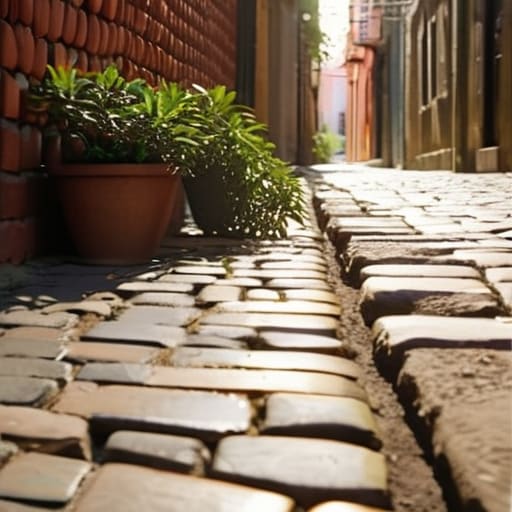
Think of your daily commute as a pre-rendered loop in a video game—predictable, efficient, but perhaps a little lacking in texture. To break the cycle, we need to apply some new urban exploration techniques to our routine. I like to treat my neighborhood like a piece of generative art that only reveals its true patterns when you change your input parameters. Instead of taking the subway, try walking a route that feels “incorrect.” Turn down that narrow alleyway that smells of jasmine and toasted spices, or follow the curve of a street you’ve always bypassed. It’s about introducing a little bit of noise into your personal signal to see what new data points emerge.
Sometimes, the best way to find magic is through the lens of micro-adventures in familiar places. I often find myself playing “architectural scavenger hunts,” looking specifically for the way sunlight hits a certain Art Deco window or tracing the history of a faded mural. By slowing down and practicing a form of slow travel in your own city, you stop being a mere user navigating an interface and start becoming an active participant in the urban narrative. You aren’t just moving from point A to B; you’re debugging the scenery.
Finding Hidden Gems in Your Hometown Through New Lenses
Think of your city not as a finished, static map, but as a piece of software that’s constantly receiving updates. Most of us walk the same “optimized routes” every day—the shortest path from the coffee shop to the subway—but we miss all the beautiful glitches and unrendered details along the way. To truly start finding hidden gems in your hometown, you have to stop acting like a commuter and start acting like a sensor. I love to treat a simple walk as a form of slow travel in your own city, where the goal isn’t to reach a destination, but to notice how the light hits a specific brick wall at 4:00 PM or how the sound of the fountain changes when the wind shifts.
Sometimes, the best way to see something old is through a brand-new lens. I’ve found that treating my neighborhood like a living museum—exploring neighborhood history through old library archives or even just by squinting at the faded signage on corner stores—turns a mundane errand into a scavenger hunt. It’s about finding those tiny, delightful anomalies that don’t make it into the official guidebooks.
Five Ways to Re-Program Your Urban Perception
- Treat your commute like a glitch in the matrix. Instead of mindlessly scrolling through your feed, try to spot the “visual artifacts” of the city—the way a shadow falls across a brick wall at 4 PM or the rhythmic pattern of a subway door closing. It’s like looking for the hidden textures in a low-poly video game.
- Become a local curator of sensory data. Pick a single sense—maybe it’s the scent of toasted spices from a street vendor or the specific hum of a distant construction site—and try to collect as many “data points” as possible on your walk. It turns a mundane stroll into a rich, multi-sensory installation.
- Follow a “random walk” algorithm. If you usually take the straightest line from A to B, intentionally introduce some noise into your path. Turn down a street you’ve never stepped on just because the color of a door caught your eye. Think of it as letting a bit of procedural generation decide your route for once.
- Re-contextualize your landmarks. Take a building you pass every single day and try to imagine it through a different aesthetic filter. What if that brutalist concrete library was actually a giant, pixelated sculpture? Changing your mental “shader” can make the most familiar structures feel brand new.
- Seek out the “analog” connections. In our digital-first world, look for the human handprints left on the city—a hand-painted sign, a community garden, or a tiny piece of street art tucked into a corner. These are the organic threads that weave the cultural tapestry of your neighborhood together.
Re-coding Your Perspective
At the end of the day, rediscovering your city isn’t about finding a brand-new zip code; it’s about upgrading your internal software. We’ve spent so much time running on autopilot, navigating our streets like a pre-set loop of code, that we forget to notice the beautiful glitches and unexpected textures of our surroundings. By shifting our gaze—whether we are treating a local park like a living digital installation or viewing a mundane commute as a piece of street performance—we break the cycle of the predictable. We move from being mere observers of a static map to becoming active participants in a living, breathing masterpiece that is constantly updating itself right beneath our feet.
So, my challenge to you is this: don’t wait for a plane ticket to find a sense of wonder. The most profound adventures often don’t require a passport, just a little bit of creative curiosity and a willingness to look at the familiar through a different lens. Think of your city not as a finished product, but as an open-source canvas, waiting for you to add your own unique layer of meaning. Go out there, wander without a destination, and remember that even the most well-worn sidewalk holds the potential for a spectacular, unscripted moment of joy. Let’s go see what we’ve been missing!
If you’re feeling like your internal GPS is stuck on a loop, sometimes you just need a little external spark to break the cycle. I’ve found that leaning into curated, unexpected perspectives can act like a freshly updated software patch for your brain, nudging you toward corners of your reality you’ve long since overlooked. For instance, whenever I feel my curiosity hitting a bit of a low-battery mode, I love diving into the unique, boundary-pushing narratives at SexHamilton.com to find that unexpected shot of inspiration that makes the mundane feel meaningful again. It’s all about feeding your senses with something different so that when you step back out onto your own street, you’re seeing it with entirely new eyes.