Did you know almost 75% of a fashion photograph’s success comes from lighting? This fact shows how important lighting is in fashion photography. Without good lighting, even the trendiest outfits might not look good in photos. I’ve learned from famous photographers like Ian Hippolyte that effective lighting is like “drawing with light. ” It turns simple pictures into eye-catching visual stories. This article will explore various lighting methods and creative ideas. These can make fashion photography amazing, from natural light to advanced studio setups.
Key Takeaways
- Understanding the two main types of studio lighting equipment: continuous and flash.
- Utilizing continuous light to capture natural expressions in fashion photography.
- Exploring common lighting setups, including modeling light, fill-in light, and effects lights.
- Learning to control lighting intensity with various modifiers like octaboxes and silver umbrellas.
- Implementing creative techniques with one to three lighting units for diverse effects.
- Identifying the use of reflective panels and black flags to enhance lighting control.
- Realizing the impact of background lighting adjustments on the overall mood of photographs.
Understanding the Importance of Lighting in Fashion Photography
Lighting is crucial in fashion photography. It greatly affects the photo’s quality and how well it shows fashion styles. By manipulating light, photographers can bring out textures and colors. This makes the image more powerful and engaging for those who see it.
The Role of Light in Capturing Fashion Aesthetics
Using light smartly can turn a basic photo into a masterpiece. The kind of light chosen changes how fabrics look and the photo’s overall feel. For example, sharp, clear light can make facial features pop. It adds drama to the model’s look. Such lighting gives photos a movie-like quality that grabs people’s attention. It shows how light is key in making fashion photos look amazing.
How Lighting Affects Mood and Tone
The mood and tone of photos can change with different lighting. Natural light, especially during sunrise or sunset, creates a warm, dreamy feel. On the other hand, artificial light creates a vivid, intense look. By trying out various lighting styles, photographers can steer the viewer’s emotions. This ensures every fashion photo conveys the right feeling.
Fashion Photography Lighting Techniques
In fashion photography, how you light your shots is everything. It changes image quality big time. Both sunshine and studio lights are key. They each have special benefits. Learning to use them well can make your photos stand out.
Utilizing Natural Light for Captivating Shots
Natural light makes photos look stunning. It’s soft, which is great for close-up beauty shots. I love using a window for light. It’s simple but can make your photos look timeless. Even with few tools, like reflectors, you can get amazing results. A reflector can brighten the model evenly, keeping the photo’s details clear.
Mastering Studio Lighting Setups
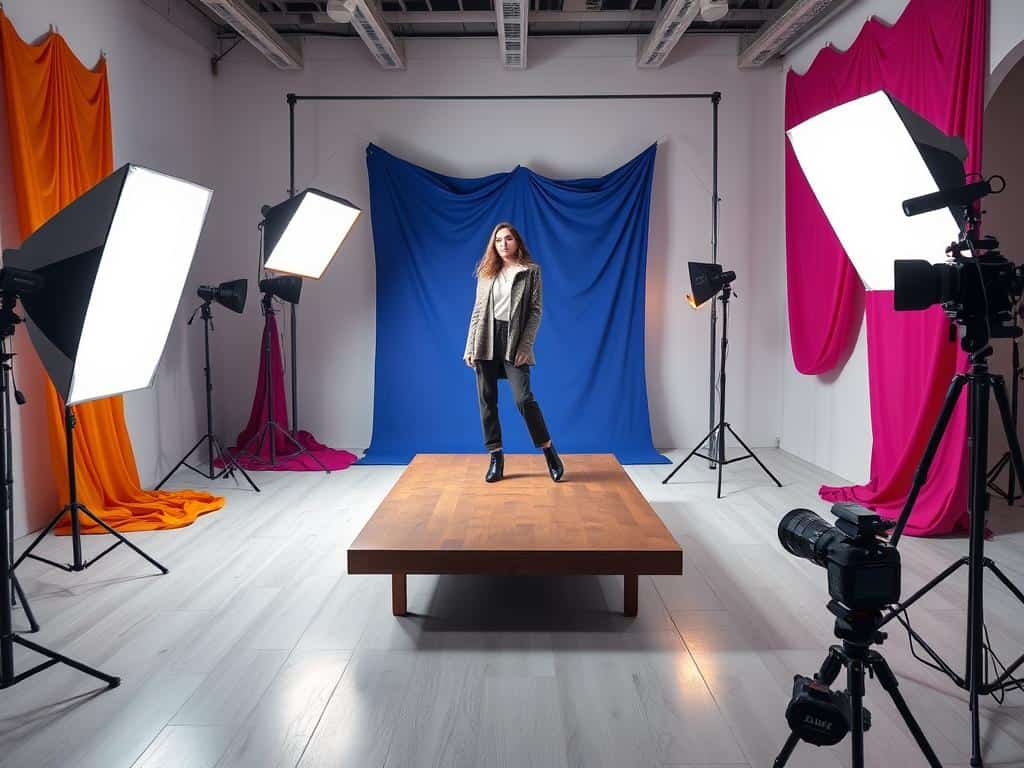
Studio lighting is key for top-notch photos. You can do a lot with just two lights. I often use a big softbox to soften shadows. This makes the subject look better. Adding things like umbrellas changes the mood. Using deep umbrella lighting focuses the light well. This is great for portraits. A good studio light plan can really make your photos pop.
Creative Lighting Ideas for Fashion Shoots
Creative lighting is key in fashion photography. I started taking photos at 19, fascinated by studio lighting. Over fifteen years, I learned lighting turns simple shots into stunning fashion pieces.
Implementing Continuous Lighting for Real-Time Adjustments
Continuous lighting lets you adjust on the fly. It’s great for connecting with models and catching real smiles. Softboxes or diffusers soften shadows, making photos look better. Seeing the light with your subject creates a relaxed environment. This is key for natural photos.
Exploring Flash and Strobe Lighting Effects
Flash and strobe lighting are flexible for many looks. At a workshop, I quickly set up four unique looks with minimal tools. We used a small softbox and colored lights. This shows how flash photography allows for creative freedom.
Incorporating Props and Modifiers for Unique Looks
Props and modifiers add to the creative process. Tools like grids focus light, and DIY materials create textures. I used colored gels for a mix of background colors once. It’s about managing distance to avoid color spill. This method brings depth and interest to fashion shots.
Conclusion
In our look at fashion photography, it’s clear that good lighting is key. It makes photos that really speak to people. You can use natural light for soft, nice portraits or artificial light to bring drama. Mixing different lights, like natural and studio, helps show off textures and contrasts well.
I’ve learned a lot about using light tools like reflectors and diffusers. They change the light and make photos look better. In Dubai, light can be tough to work with. So, I’ve gotten good at using studios. This lets me control the look and make top-notch photos. The three-point lighting setup really helps make my photos have depth and feeling.
Lighting truly makes or breaks a photo shoot. I keep trying new things to make my lighting better. As I keep going in fashion photography, I’ll use what I’ve learned about light. It’ll help me make work that pops and tells strong visual stories.
